A conversation with the Founder and CEO of BeshiDeshi about ownership over control, discipline over ambition, and why trust will outcompete price.
In Bangladesh's fast-moving business landscape, leadership is often equated with having all the answers, making quick decisions, and keeping everything under control. Zeeshan Khurshed Mazumder, Founder and CEO of BeshiDeshi, sees it differently.
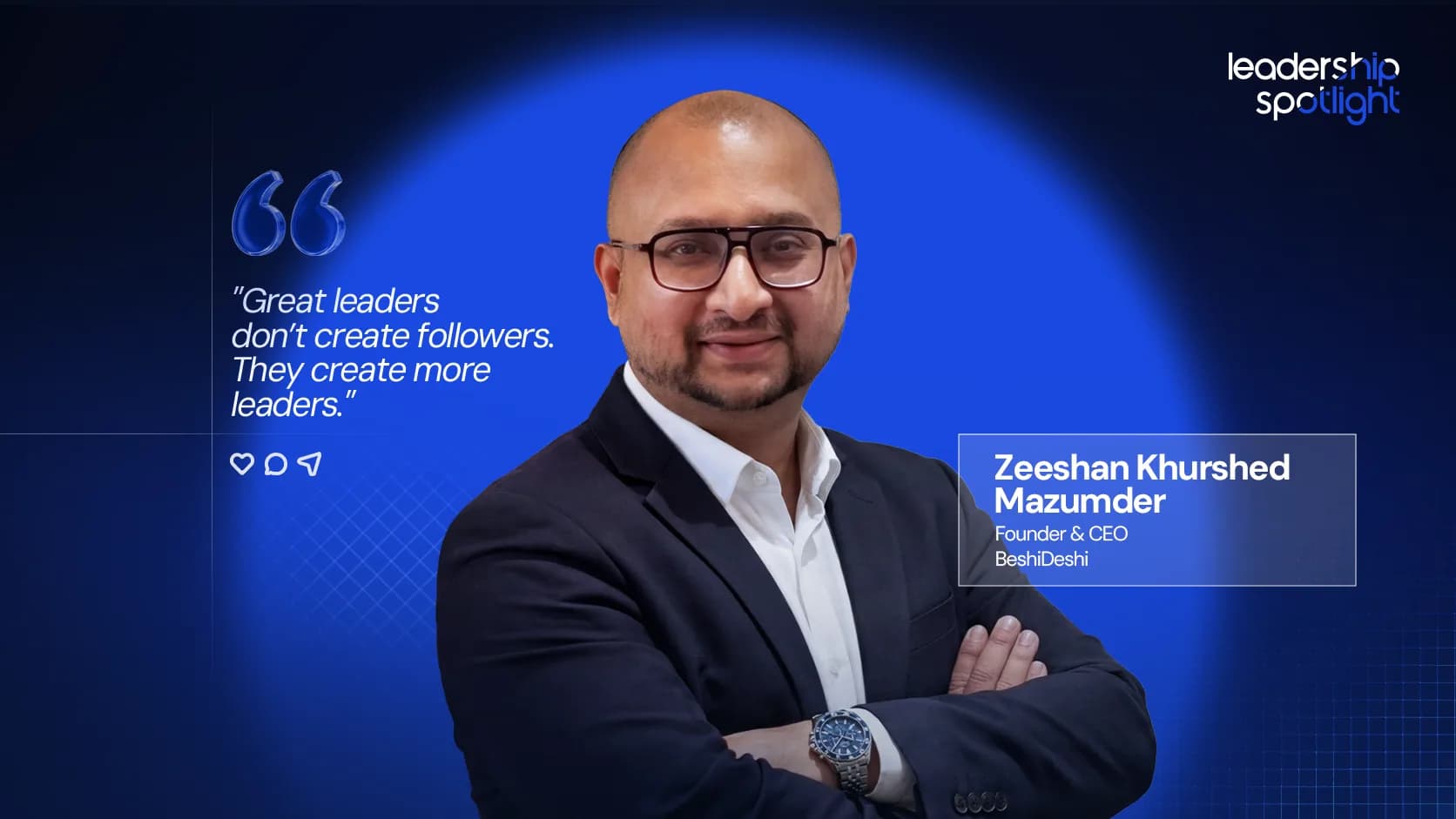
"I believe great leaders don't create followers, they create more leaders by building trust, giving ownership, and helping people grow."
It's a simple line, but it challenges a common assumption: that the leader should always be the most important person in the room. For Mazumder, leadership isn't about making people dependent on you. It's about helping them become capable of leading alongside you.
Control Feels Like Leadership. It's Usually a Bottleneck.
Many leaders feel valuable when every important decision runs through them. They approve the work, solve the problems, and answer the difficult questions. Over time, the team gets used to waiting for direction before moving.
That looks like control. It's actually a dependency, and as an organization grows, dependency gets expensive. Every decision becomes another bottleneck, and every problem travels upward instead of getting solved by the person closest to it.
Two Teams, One Problem
Picture two teams hitting the same unexpected issue. In the first, everyone stops and waits for the founder to decide what happens next. In the second, the person closest to the problem investigates it, weighs the options, recommends a solution, and keeps the leader informed throughout.
One team depends on a leader. The other is growing leaders, and that difference compounds as the business scales.
A company can't grow sustainably if all its confidence and decision-making stay concentrated in one person. The strongest leaders build people who can think, decide, and take responsibility even when the leader isn't in the room.
Hire for Attitude. Skills Can Be Taught.
Asked what he values most when bringing someone onto the team, Mazumder didn't hesitate:
"Attitude and willingness to learn. Skills can be taught, but curiosity, integrity, accountability, and the desire to improve every day are much harder to develop."
Experience matters. Technical ability matters. But neither guarantees someone will actually grow with the organization.
A polished résumé can still arrive attached to someone who avoids responsibility or waits to be told what to do. A less experienced hire with curiosity, integrity, and a genuine drive to improve will often outpace them within a year.
- Curiosity pushes people past finishing the task and into understanding why it matters.
- Integrity is what makes someone dependable rather than just productive, showing up in honest updates and in raising concerns early.
- Accountability turns mistakes into forward motion instead of excuses.
Skills tell you what someone can do today. Attitude tells you what they'll become.
Stop Trying to Have Every Answer
There's constant pressure on managers to appear certain, to walk in already knowing the solution, and land the final call before anyone else gets a real chance to contribute. Mazumder pushes back on that instinct directly:
"Managers should stop trying to have all the answers. Strong teams are built when leaders listen more, trust their people, encourage ownership, and create an environment where it's safe to learn from mistakes."
A manager who always supplies the answer might solve today's problem quickly, but removes someone else's opportunity to build judgment. Over time, the team stops asking "what's the best decision for the business?" and starts asking "what does the manager want me to do?"
The people working closest to a problem often notice details senior leaders simply can't see from a distance. Leaders who listen more make fewer avoidable mistakes, because they're pulling in information the org chart alone can't surface.
Make It Safe to Fail, Not Free to Fail
Creating a safe environment around mistakes doesn't mean lowering standards or removing accountability. It means changing what happens right after something goes wrong.
When the first response to a problem is blame, people learn to hide bad news. They delay difficult conversations and spend more energy protecting themselves than solving the actual issue.
But when leaders ask "what happened, what did we learn, and how do we prevent this next time," mistakes turn into useful information instead of something to bury. Mazumder's underlying point: psychological safety and accountability aren't opposites. Strong teams need both at once.
Reflect on Wins as Hard as You Reflect on Losses
Failure demands attention because it forces itself into the room. Success is different. When something works, it's tempting to celebrate briefly and move on, but successful outcomes carry lessons too.
"I make time to reflect on both successes and failures, stay curious by learning from entrepreneurs and real-world experiences, and regularly seek feedback from customers, my team, and mentors. Small improvements made consistently create long-term growth."
Reflection is what separates a good decision from good luck. Mazumder pulls the signal from three different angles rather than one. Customers reveal whether the business is solving something that actually matters. Team members surface operational challenges that aren't visible from the top. Mentors bring a perspective shaped by entirely different experiences.
Seeking feedback from all three requires some humility, since the leader may hear something uncomfortable, but that discomfort is usually where the real improvement starts.
The Mistake He Regrets: Growing Too Fast
Growth is one of the most exciting stages of building a company, but it also stresses every weak part of an organization. Asked about a decision he'd take back, Mazumder was direct:
"One lesson I learned was trying to grow too quickly before building strong systems and processes. It taught me that sustainable businesses are built on disciplined execution, not just ambitious ideas. Today I focus on building foundations before scaling."
Ambition can start a business. It can't sustain one on its own. Without clear systems, the same problems tend to repeat: inconsistent customer experiences, team members relying on personal memory rather than shared processes, and leaders stuck firefighting rather than planning ahead.
Strong systems turn individual knowledge into organizational knowledge, and documentation keeps lessons within the company even after employees move on. The real question isn't "how fast can we grow?" It's "can our people and processes support the growth we're chasing?"
What's Next: Brands That Stand for Something
Asked where his industry is headed over the next five years, Mazumder looked past tools and tactics entirely:
"Consumers will increasingly choose brands that stand for something beyond products. Authentic storytelling, trust, quality, and community will become bigger competitive advantages than price alone, while AI will reshape how businesses operate and engage with customers."
Price is a race to the bottom. Someone will always undercut it. Trust isn't. It's built through consistency between what a brand says and what it actually does, and it compounds through community: spaces where customers speak to the brand and to one another, rather than only being spoken to.
Where AI Fits Into That Picture
AI can help businesses analyze information, automate repetitive work, and personalize communication at a scale humans alone can't match. But technology should strengthen customer relationships, not make them feel less human. AI can help a company understand what customers are asking, but trust determines whether customers believe the answer.
It's a multiplier on whatever's already there, good or bad. The advantage won't come from using AI just because it's available. It'll come from applying it thoughtfully while keeping the human qualities customers value.
Advice for the Next Generation
"Build something that genuinely solves a problem, stay patient, and think long term. Trends come and go, but integrity, resilience, and consistency will always outperform shortcuts. Success is rarely about one big breakthrough. It's about making good decisions repeatedly over time."
Most sustainable businesses aren't built by a single dramatic decision. They're built through years of smaller choices: solving a real customer problem instead of chasing attention, choosing integrity when a shortcut looks easier, and holding consistency together even as motivation shifts.
Trends can create opportunity, but they can't replace a foundation.
Leadership That Multiplies
The clearest theme across the conversation is that strong leadership builds others' capability. It starts with hiring for curiosity and accountability. It continues when managers stop trying to control every answer and start trusting their teams to contribute.
It becomes sustainable when businesses build strong foundations before chasing scale, and it lasts when leaders choose long-term trust over shortcuts that feel faster in the moment.
A leader's success shouldn't be measured by how many people wait for their direction. It should be measured by how many people become confident enough to take responsibility and help others grow. Great leaders create more leaders, not followers.
Key Takeaways
- Build ownership, not dependency: give people the trust, authority, and support they need to develop their own judgment.
- Hire for attitude: curiosity, integrity, and accountability are much harder to teach than skills.
- Stop having all the answers: listening opens space for better decisions than a manager acting alone.
- Separate blame from accountability: safety to admit mistakes and responsibility to fix them aren't in conflict.
- Reflect on success, not just failure: understanding why something worked matters as much as understanding why it didn't.
- Build foundations before scaling: systems and disciplined execution are what sustain growth.
- Compete on trust, not price: quality, community, and meaningful brand values are becoming bigger advantages than price alone.
- Use AI as a multiplier, not a shortcut: it amplifies the trust and quality that's already in the business.
- Think long term: integrity, resilience, and consistency will always outperform shortcuts.
About Leadership Spotlight
Leadership Spotlight is Notionhive's interview series featuring business leaders from across Bangladesh's industries. The practical wisdom, honest lessons, and real experiences that shape how successful leaders build teams and drive growth.

About Author
Notionhive TeamThe Notionhive Team is a multidisciplinary group of strategists, SEO specialists, and marketing experts, all committed to helping businesses grow through smart digital marketing and meaningful innovation. They share practical insights, emerging trends, and expert perspectives to help organizations make informed decisions and thrive in an ever-evolving digital landscape.