Search used to be about links. Now it is about answers.
Anyone who has noticed AI Overviews sitting at the top of Google has already seen Answer Engine Optimization in action.
Here's the thing, though. Most website owners still treat schema markup as an old SEO checkbox, something added for star ratings and forgotten. That mindset is outdated, and it is costing visibility.
Schema has quietly become one of the strongest signals AI systems use to decide who gets cited and who gets ignored.
In this guide, we will break down how Schema Markup for AEO supports answer visibility, which schema types matter most, and how to implement them correctly. For a broader view, please feel free to see Notionhive's AEO guide.
What Is AEO and Why It Matters Now
So, what is Answer Engine Optimization exactly?
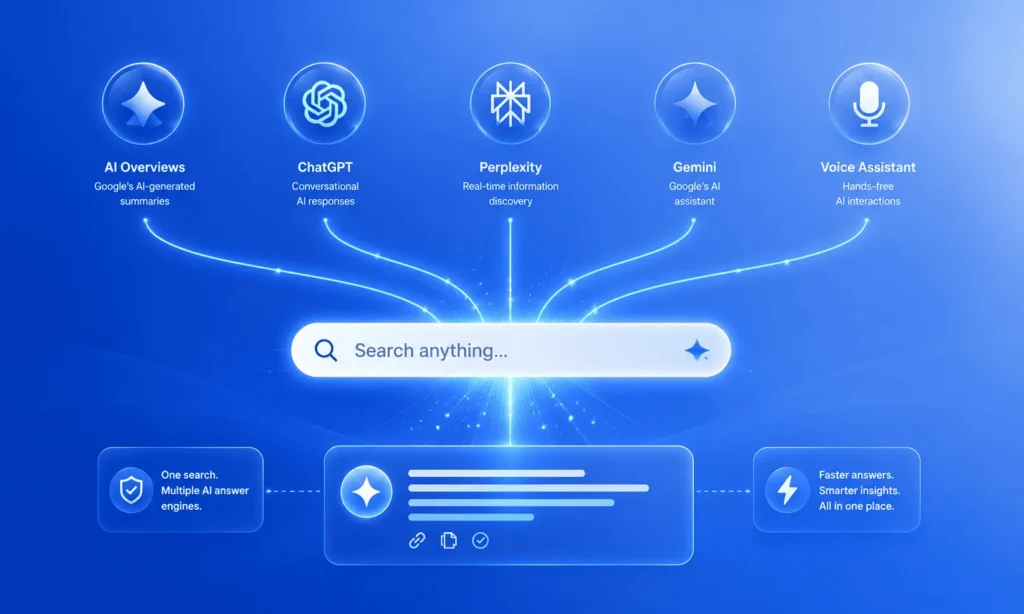
Answer Engine Optimization focuses on getting content selected as the direct answer, not just a ranked link. It covers AI Overviews, ChatGPT, Perplexity, Gemini, and voice assistants, all of which pull from structured, well-organized sources.
How AEO Differs From Traditional SEO
We all know that Traditional SEO chases rankings and clicks. In the case of AEO, chases citations and trust. This shift is covered in more depth in GEO vs SEO.
You might be wondering why this matters right now. Google AI Overviews already appear in roughly 50% of searches, and that share keeps climbing. That is not a niche trend; it is a shift in how people find information.
The Business Cost of Ignoring AEO
If content is not structured for machine readability, it becomes invisible to a growing share of searchers, no matter how well written it is. Brands not optimized for AI answer engines miss out on users who convert at 4.4x the rate of traditional search visitors.
Let's break it down further.
What Is Schema Markup, In Plain Terms
Schema markup is code added to a website's HTML that explains what the content actually means, not just what it says. It gives AI systems the context they need to trust and reuse information.
The Core Definition
Schema markup is structured data added to a page so that AI systems can understand, extract, and reuse the information with confidence.
Schema vs Structured Data
These terms get used interchangeably, but they are not identical. Structured data is any organized data, while schema specifically refers to the schema.org vocabulary that AI systems read in JSON or microdata format.
JSON-LD is the format most sites use today, since it keeps the code separate from the visible page design and is easier to maintain at scale.
Why Schema Markup Is a Foundational AEO Signal
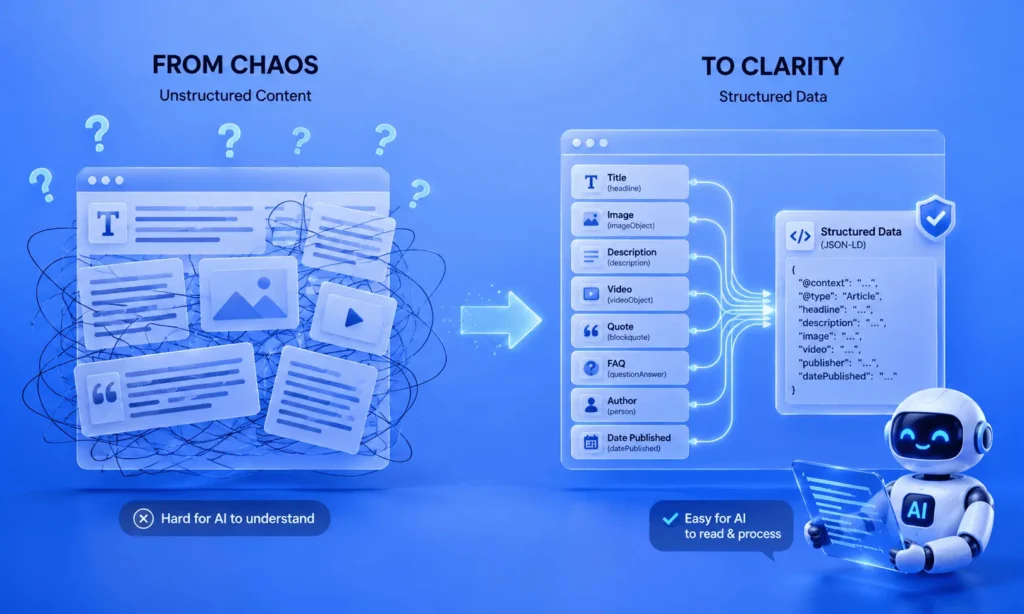
Here's where things get interesting. AI systems do not read a page the way a person does. They rely on structure to remove guesswork, and schema is the clearest way to provide that structure.
Removing Ambiguity for AI Crawlers
Schema markup removes ambiguity for AI by clarifying what content covers and how it connects to known entities. It works much like the signals described in entity SEO and brand authority.
The Citation Rate Difference
Numbers make this easier to trust than opinions do. Pages with clean structure and schema earn 2.8x higher AI citation rates than poorly structured pages. That is the difference between being invisible and being the source an AI model quotes by name.
A mid-sized service business saw this play out directly. Its FAQ page sat untouched for over a year, in plain text with no markup.
Once the FAQ schema was added, using questions phrased the way customers actually asked them, the page began surfacing in AI Overview answers within a few weeks, with nothing else on the page changed.
It's a small case study, but it captures why so many teams are now prioritizing Schema Markup for AEO over older, ranking-only tactics.
Schema and Entity Recognition
AI systems think in entities, not keywords. Search engines rely on understanding entities and their relationships rather than matching keywords alone, which is why schema plays such a central role.
That could mean identifying a business as a LocalBusiness, or tagging an author as a verified expert.
Which Schema Types Actually Matter for AEO
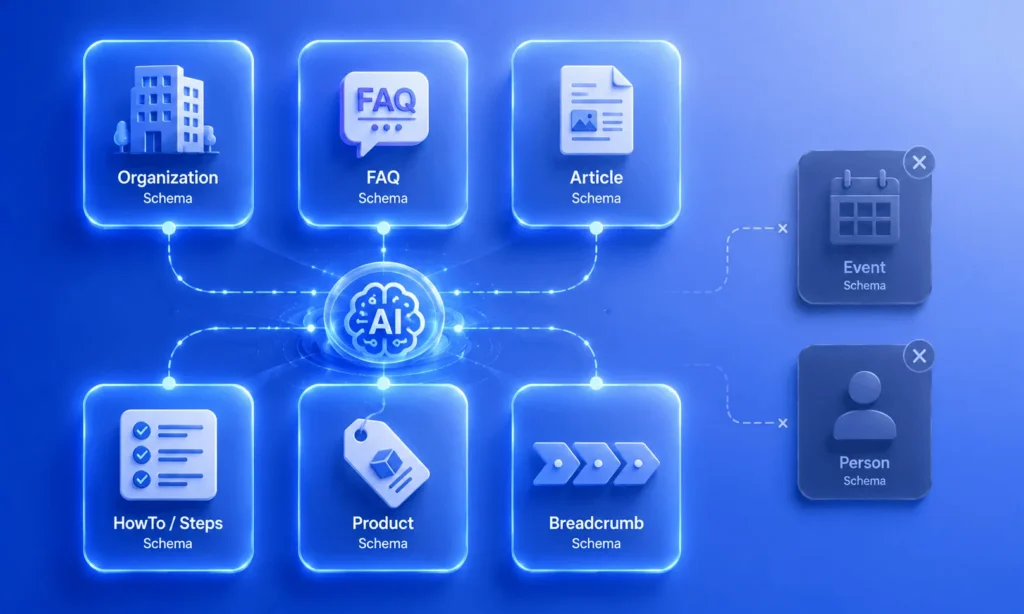
Not every schema type moves the needle. Let's dig a little deeper into the ones that consistently do, and why each one earns its place on the list.
Organization Schema
This defines a brand as a real, verifiable entity. Four fields matter most, according to research on Organization schema fields: sameAs, knowsAbout, founder details, and a differentiating description.
Without these, AI engines cannot confidently confirm who a business is.
FAQPage Schema
The FAQ schema maps directly to how people ask AI systems questions, making it one of the more underused opportunities.
The FAQ schema currently appears on only 10.5% of AI-cited pages, despite aligning with how answer engines retrieve information. That gap is a real opportunity for sites willing to close it.
Article and BlogPosting Schema
This tells AI systems that content comes from a legitimate, attributable source rather than an anonymous or unverifiable page. Article schema should sit on every blog post, with a named author, a publish date, and a last modified date.
HowTo Schema
Ideal for tutorials, setup guides, and step-based content where sequence matters. The HowTo schema is best suited for tutorials and guides, helping AI present clear, step-by-step instructions rather than a wall of unstructured text.
Product and Review Schema
For anything commercial, this schema type carries real weight. Product and Review schema are essential for e-commerce sites targeting shopping-related queries, but only when the fields are actually filled in.
A schema that validates but skips pricing or availability is technically correct and practically useless.
BreadcrumbList Schema
This one is easy to overlook, but it clarifies where content sits inside a site's structure and how sections relate to one another. BreadcrumbList schema supports taxonomy clarity, helping engines understand page hierarchy at a glance.
Field Level Rigor, The Part Most Sites Skip
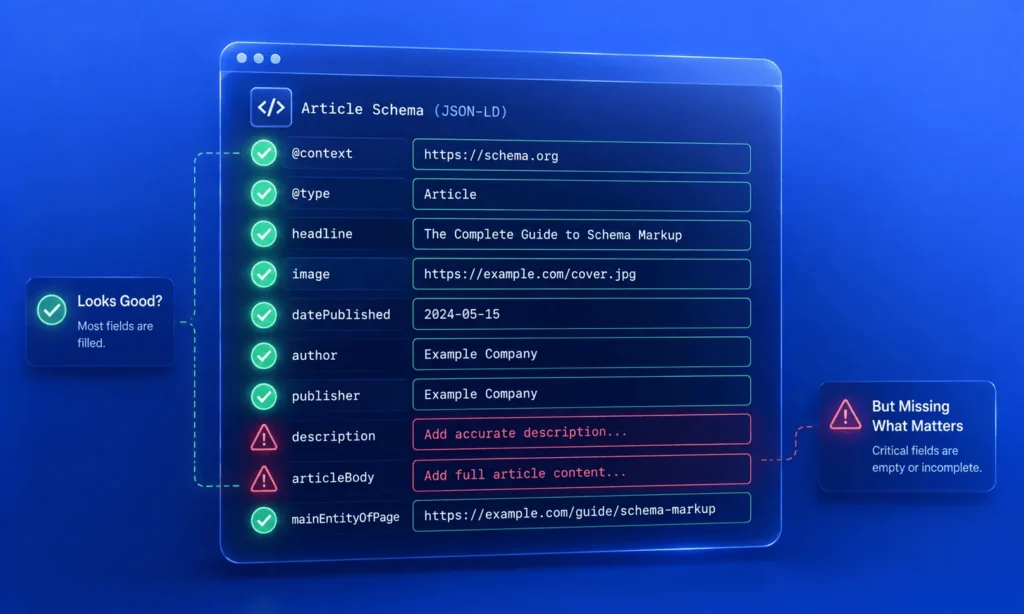
You might already suspect the answer here. Adding schema is easy. Adding schema that actually works is not, and that gap is where most sites quietly lose ground.
Why Valid Schema Can Still Be Worthless
Valid but meaningless markup happens when the schema is technically correct but adds little semantic value. It passes validation tools without complaint, yet tells the AI system almost nothing useful about what the page actually offers.
An audit of a regional e-commerce catalogue once turned up dozens of Product schema blocks deployed years earlier through a plugin default. Every block validated cleanly, but none included current pricing, stock status, or brand attribution, which made them functionally invisible.
The 40 to 60 Word Answer Rule
This is a detail worth pausing on. The 40 to 60 word range is optimal, since AI engines often extract these blocks nearly verbatim as citations. Anything past 80 words tends to get truncated and lose context along the way.
Schema Markup Data Snapshot
Below is a quick reference table summarizing what matters most across the schema types covered so far.
| Schema Type | Primary AEO Function | Key Fields to Prioritize |
| Organization | Brand and entity disambiguation | sameAs, knowsAbout, founder |
| FAQPage | Direct answer extraction | Question, acceptedAnswer |
| Article/BlogPosting | Source credibility and freshness | author, datePublished, dateModified |
| HowTo | Step-based instructional content | step, tool, totalTime |
| Product/Review | Commercial intent and trust | price, availability, aggregateRating |
| BreadcrumbList | Site hierarchy and topical context | itemListElement, position |
How Schema Fits Into a Broader AEO Strategy
Schema is not a magic switch. It works best alongside a strong content structure.
Schema Alone Will Not Save Weak Content
That said, there's an honest flip side worth acknowledging. Research shows traditional SEO signals, including structured data, predict only 4% to 7% of AI citation behaviour.
Schema is a hygiene factor, not a silver bullet, and treating it as one leads to disappointment.
Content Structure Still Comes First
Direct, well-placed answers matter as much as the code behind them. 55% of AI Overview citations come from the first 30% of the page, suggesting that a clear, upfront answer paired with schema outperforms schema layered onto scattered writing.
A Practical Implementation Roadmap
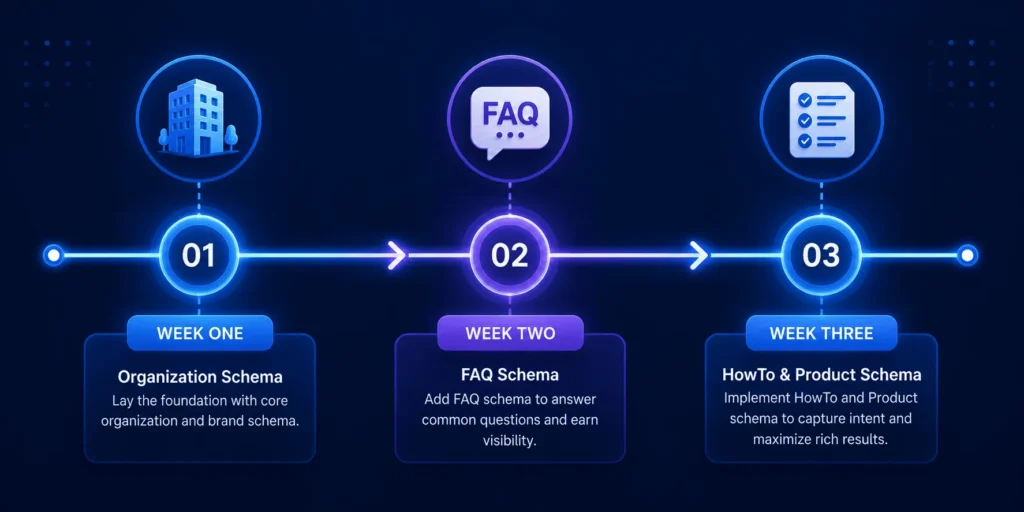
To help you get started, here is a sequence that works when applied in order rather than all at once.
Week One Priorities
Start with the Organization schema on the homepage, including sameAs links to every platform where the brand appears. Add Article schema to every blog post, with a named author and both published and modified dates.
This first week lays the foundation for the rest of the Schema Markup for AEO rollout.
Week Two Priorities
Add FAQ schema to the top ten highest traffic pages, sourcing questions from real sales calls and support tickets rather than keyword tools. Add the Product schema to every product and pricing page simultaneously.
Week Three Priorities
Add HowTo schema to procedural content such as implementation guides and setup docs. Validate everything before moving forward or calling the rollout complete.
Common Pitfalls to Avoid
Field observations across different sites tend to surface the same handful of mistakes, regardless of industry or site size.
Placeholder or Incomplete Fields
Adding a schema type without filling in the fields that carry real meaning defeats the purpose. A Product schema missing price and availability is a common example and one that often shows up during technical audits.
Mismatched On-Page and Schema Data
Authorship and dates in the schema will not help AI systems trust the content unless the same information is visible on the page itself. A mismatch between the two often reads as a red flag rather than a technical oversight.
Treating Schema as a One-Time Task
Content changes, and the schema needs to change with it. Stale date Modified fields signal to AI systems that a page may no longer be current, an issue explored further in LLM caching.
Measuring Whether Schema Is Working
Bottom line, there needs to be a way to know whether the effort is paying off, rather than assuming it is. Tracking citation rates before and after a schema refresh is one practical way to measure AI visibility gains over time.
Watching citation frequency across ChatGPT, Gemini, and Perplexity gives a clearer signal than rankings alone.
Final Thoughts
Schema markup will not single-handedly win AI citations, but skipping it puts any site at a real disadvantage. It is the layer that turns ambiguous text into something an AI system can confidently extract, trust, and quote.
Pairing a complete, field-level schema with clear, upfront answers gives content the best chance of being the source an AI engine chooses, and that is the real goal of AEO: to be the answer rather than just another link in the results.
Getting schema right across an entire site takes planning, and it is easy to get technically wrong along the way. Notionhive works with brands on structured data and AEO implementation, from entity mapping to full JSON-LD deployment.
FAQs
1. Does schema markup guarantee AI citations?
No. Schema Markup for AEO improves machine readability, but content quality, authority, and freshness still carry significant weight in citation decisions.
2. Which schema type should be implemented first?
Organization and Article schema, since they establish brand identity and source credibility before other schema types add much value.
3. Is JSON-LD better than microdata for AEO?
Yes. JSON-LD scales easily across templates and does not interfere with page layout or visible content.
4. How often should the schema be updated?
Whenever the underlying content changes, there should be a quarterly review as the minimum baseline for most sites.
5. Can small businesses benefit from the schema for AEO?
Yes. Local businesses benefit from the LocalBusiness and Organization schema because it helps AI systems accurately verify identity and location.

About Author
Tanzim Sarwar TazTanzim Sarwar Taz is a content writer with 7+ years of experience creating in-depth content on SEO, technology, web development trends, and AI-driven search. His work focuses on emerging topics such as AEO, GEO, search experience optimization, artificial intelligence, and modern web technologies, delivering practical insights backed by research and industry developments.