You already know that security breaches are costly for your business. IBM data pegs the global average cost at $4.88 million this year, and much of that pain comes from apparent gaps. You can close these gaps quickly once you understand the language of modern web security.
This guide will define the most crucial concepts in clear, direct language. Knowing these terms moves you from passively reacting to security incidents to proactively driving a robust defence strategy.
The Basics That Still Trip Up 80 % of Companies
The most basic layer of web security involves protecting the communication channel between your user and your server.
Failure here means that any passerby can overhear your customers' conversations. You must ensure your data is always scrambled while travelling across the internet.
HTTP vs HTTPS
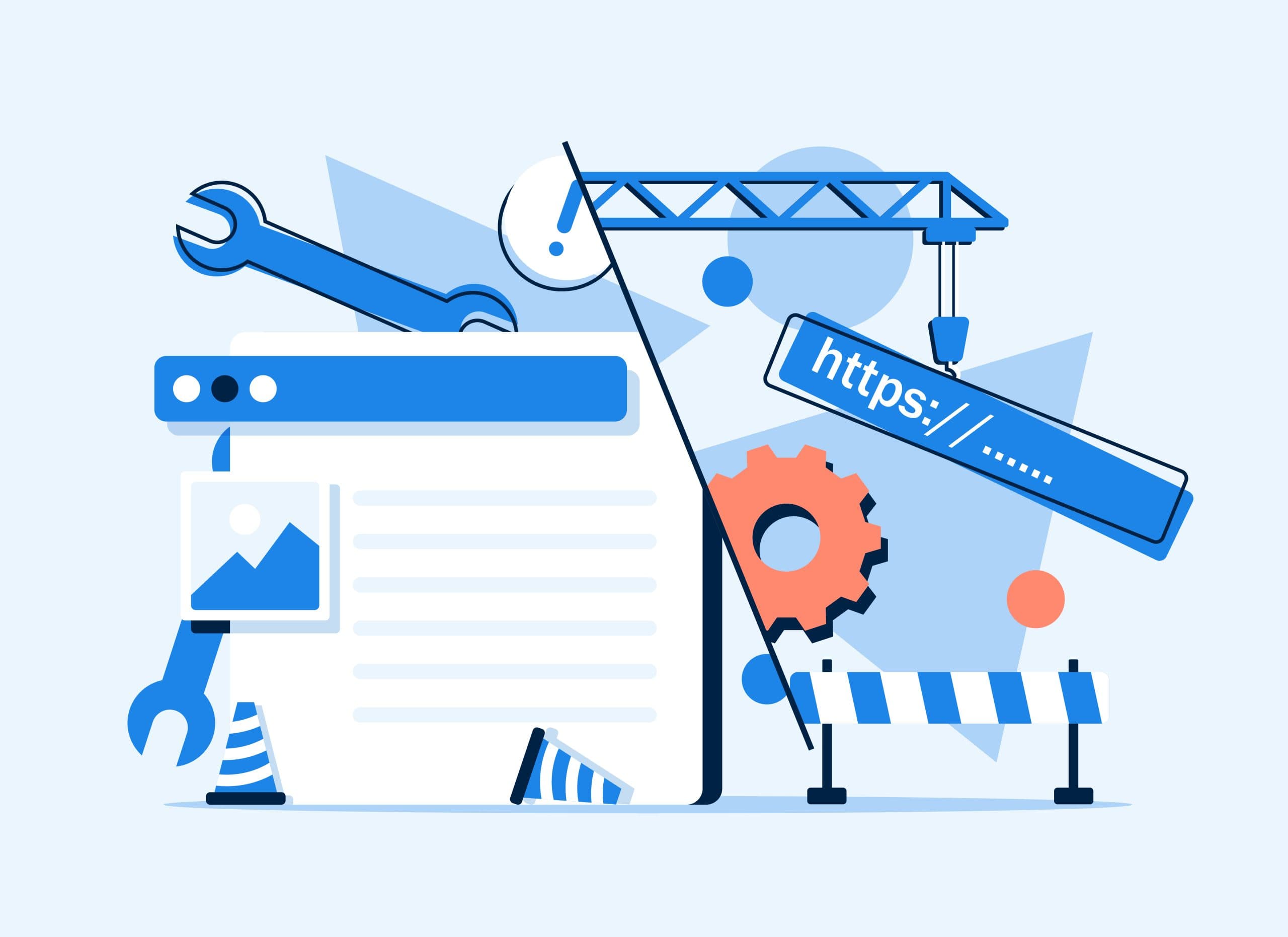
Without the “S,” every piece of data travels in plain text. Switching to HTTPS and TLS encryption scrambles it so only the intended recipient can read it.
In 2025, every major browser marks HTTP pages as “Not secure,” actively hurting their ranking, so you're losing trust and traffic the moment that padlock disappears.
For more on why HTTPS is essential, check out our article on What Is Web Security and Why Does It Matter for Your Business?
TLS – Transport Layer Security
This is the engine that actually does the encryption behind HTTPS. TLS 1.3 is now the universal standard: faster, cleaner, and with no known practical attacks when appropriately configured.
If your hosting dashboard still lets you select TLS 1.0 or 1.1, you’ve already found your first red flag.
SSL/TLS Certificates
The certificate proves that the site is really you and not a fake one. Let’s Encrypt gives you one for free every 90 days, with no downsides.
Paid certificates from DigiCert or Sectigo are functionally identical for almost every business. Spend the extra money only if you want a bigger insurance warranty, not better security.
Encryption In Transit vs At Rest
Encryption In Transit protects your data while it travels across the internet using TLS. Encryption At Rest protects your data when it is sitting statically on a hard drive, server, or backup tape.
You absolutely need both of these protections in place. Far too many companies nail the first and completely forget the second until ransomware encrypts their database twice.
If you’re curious about web security best practices, you might find the article How Can You Make Your Website More Secure in 2025? helpful!
The Building Blocks of Almost Every Breach
The majority of security incidents still happen because companies fail to manage the lifecycle of vulnerabilities. You must know the terms that define the weaknesses and the tools used to exploit them.
Vulnerability
Any weakness that can be abused, from an outdated WordPress plugin to a misconfigured server header.
Over 25,000 new CVEs are published every year, yet the median small-business site still runs at least a dozen critical ones that are older than 24 months.
Exploit
The actual tool or script attackers use to turn that vulnerability into a compromise. Public exploits for critical flaws often drop the same day patches are released.
Most real-world breaches you read about still rely on exploits that have been public for years. This is simply because an employee or developer never updated the software.
Zero-Day
A Zero-Day flaw is a vulnerability that has not been patched because the vendor does not yet know it exists. These are extremely expensive and typically reserved for very high-value targets you might not be.
You are far more likely to get hit by a five-year-old vulnerability that has had a patch available in your dashboard for the last 18 months.
Patch
The official fix from the vendor. Applying critical patches within 30 days blocks the automated scanning that drives most ransomware infections. Regular website maintenance is key to staying on top of this for sustained business growth.
Quick Comparison Table – Encryption Essentials
| Term | What It Protects | 2025 Standard | Real-World Cost of Ignoring It |
| HTTPS + TLS 1.3 | Eavesdropping & MITM | Mandatory | Instant “Not secure” warning + SEO drop |
| Valid Certificate | Site impersonation | Let’s Encrypt free | Chargebacks, legal exposure |
| Encryption At Rest | Stolen backups or drives | AES-256 | Full database held for ransom |
| Timely Patching | Known exploits | <30 days | Average $1.2 M ransomware payment |
That’s the foundation locked in. You now understand the terms that stop low-hanging-fruit attackers from grabbing them first.
Authentication: Who Gets In and How
You can handle user logins and forms every day on your site. Without understanding these concepts, small oversights can quickly turn into six-figure financial losses for your business.
We will cover authentication basics first before moving to the most common injection attacks.
Authentication
This verifies that users are who they claim to be, usually through passwords, biometrics, or tokens. Weak authentication is responsible for most breaches. Strong methods like passkeys or hardware keys cut unauthorized access by 99% in practice.
The quality of your login process is a key part of your overall UI UX design.
Multi-Factor Authentication (MFA)
MFA adds a second check beyond just a password, like a code sent to your phone or an authenticator app. Enabling MFA blocks over 99.9% of automated password-guessing attacks.
It's free on most platforms and takes under five minutes to set up, yet only a small number of businesses use it consistently.
Password Hashing
When users create passwords, sound systems never store them in plain text; instead, they're transformed into unique hashes that can't be reversed.
Modern hashing algorithms like bcrypt or Argon2 require attackers to guess billions of times to crack even weak passwords.
Storing plain passwords violates every major compliance standard and invites immediate lawsuits if breached.
Single Sign-On (SSO)
SSO lets users log in once with a trusted provider like Google or Microsoft, then access multiple services without re-entering credentials. It reduces password fatigue and centralizes security controls.
Injection Attacks: The Silent Database Killers
These attack types dominate breach reports because they are easy to execute and directly lead to the theft of large amounts of data. You must use defensive coding practices to eliminate these threats.
SQL Injection (SQLi)
Attackers sneak malicious SQL code into input fields to manipulate your database, often dumping all customer data. Sanitizing inputs with prepared statements stops it cold, but legacy code still leaves doors wide open.
Cross-Site Scripting (XSS)
XSS injects harmful scripts into web pages that run in users' browsers, allowing attackers to steal cookies or session data. Adding Content Security Policy (CSP) headers automatically blocks most XSS attempts.
Cross-Site Request Forgery (CSRF)
CSRF tricks authenticated users into performing unwanted actions, like transferring funds, by forging requests from malicious sites. Simple anti-CSRF tokens in forms prevent it entirely, yet many custom-built websites skip this step.
For a deeper dive into these specifics, read our guide on The Web Security Landscape: Common Threats and Attack Vectors.
Quick Reference Table – Authentication and Injection Terms
| Term | Main Risk It Addresses | Prevention Method | Impact of Ignoring |
| MFA | Unauthorized access | Authenticator apps | Increased risk of account compromise. |
| Password Hashing | Credential theft | Bcrypt/Argon2 algorithms | Passwords easily cracked, breached. |
| SQL Injection | Database manipulation | Prepared statements | Data theft, corruption, deletion. |
| XSS | Script execution in browsers | CSP headers + sanitization | Session hijacking, data theft. |
| CSRF | Forged actions | Anti-CSRF tokens | Fraudulent transactions |
Access Control and Privilege Mistakes
Attackers aim to move laterally once they gain initial access, and they rely on your internal mistakes to do so. These concepts govern who can access what inside your network.
Principle of Least Privilege
Give every user, process, and service only the minimum permissions needed to do their job. When this rule is ignored, a single compromised account can reach everything. Review permissions quarterly.
You'll be shocked at how many ex-employees still have admin access!
Role-Based Access Control (RBAC)
Assign permissions by job function (marketing, finance, developer) rather than to individuals. Modern platforms like Google Workspace, AWS IAM, and even WordPress plugins handle RBAC cleanly.
Session Management
The way login sessions are created, protected, and destroyed. Weak session IDs or missing timeouts let attackers hijack active logins. Set session cookies to HttpOnly, Secure, and SameSite=Strict – three flags that together help to stop session-stealing attempts.
Malware and Delivery Methods You’ll Hear About
Your team needs to monitor threats that arrive via email and other delivery channels. Ransomware and phishing remain top threats because they continue to succeed.
Ransomware
Malware that encrypts files and demands payment. In 2025, the median ransom demand is $1.32M, with recovery costs averaging $1.53M, and 49% of victims paid the ransom. Regular offline backups and rapid patching remain the only reliable defence.
Phishing
Phishing remains a dominant initial access vector for attackers. Modern phishing campaigns often use legitimate services like Google Docs or Cloudflare tunnels, meaning links alone no longer tell the whole story.
Ongoing employee simulation training can reduce the number of successful clicks over time. Stay vigilant on social platforms like Facebook and avoid phishing attempts.
Drive-by Download
A Drive-by Download occurs when infected websites silently install malware onto a visitor's computer simply by them visiting the page; no click is required. Up-to-date browsers with Safe Browsing features and a proper Content Security Policy block nearly all of them.
However, some small-business sites still load outdated JavaScript libraries that unfortunately enable these dangerous drive-bys.
Compliance Terms That Actually Matter
These terms describe the legal and operational requirements that help you formalize your security posture and ensure you are ready for a security event. You cannot afford to treat these as optional.
GDPR, CCPA, PCI-DSS
These are not IT problems – they are board-level legal obligations with eight-figure fines. All three now explicitly require encryption at rest, timely patching, and vendor risk assessments.
A single non-compliant third-party script can trigger penalties across every customer record.
Penetration Testing (Pen Test)
Controlled, authorized attack simulation against your own systems. Annual pen tests are mandatory for PCI-DSS Level 1 and strongly recommended for everyone else.
A typical penetration test in 2025 costs between US$5,000 and US$40,000, depending on scope and complexity. Manual pentesting uncovers complex vulnerabilities that automated scanners often miss, making it a valuable complement to automated scanning.
Incident Response Plan
The Incident Response Plan (IR Plan) is the written playbook for when something inevitably goes wrong—not if. Organizations with a tested plan recover significantly faster and save substantial amounts of money per incident.
If your plan is still an old document that no one has reviewed recently, it simply does not count as prepared.
Final Reference Table – The Full 2025 Checklist
| Category | Term | Must-Have in 2025 |
| Transport | HTTPS + TLS 1.3 | Enforced site-wide |
| Authentication | MFA + Argon2/bcrypt | Everywhere humans log in |
| Injection | Prepared statements + CSP | All forms and script sources |
| Access Control | Least privilege + RBAC | Quarterly reviews |
| Malware Defense | Offline backups + EDR | Tested restore monthly |
| Compliance | Pen test + IR plan | Annual test + tabletop exercise |
You now speak web security fluently enough to challenge developers, evaluate hosting providers, and read audit reports without getting snowed.
Keep this guide bookmarked. The next time someone says “we're probably fine,” run through the tables together and watch the conversation change instantly.
Final Thoughts
You have just walked through every term that appears in 95 % of real-world breach post-mortems in 2025.
From TLS handshakes to ransomware demands, these are the exact concepts that separate companies that bounce back in days from those that lose millions and sometimes never reopen.
Print the tables, tape them next to the monitor, and use them as your personal red-flag detector the next time a developer, agency, or hosting sales rep starts talking.
The numbers don't lie: businesses that understand and implement these fundamentals see breach attempts drop by 80–90 % almost immediately.
Start with three actions this week: force HTTPS across the board, enable MFA for every admin account, and schedule the first permission review. If you do this right, you will already be ahead of most targets on the internet.
Security is never “finished,” but with the vocabulary and checklist you now have, you finally control the conversation instead of reacting in panic when the inevitable attempt shows up.
For more information on web security and other digital solutions for your business, visit Notionhive for additional resources and services.
Frequently Asked Questions
Do small businesses really get targeted, or is this just for big companies?
Yes, all businesses are targets today. Threat actors automate their attacks to find the easiest vulnerabilities available on the internet. They go after the weakest security, regardless of your company's size.
Is Let’s Encrypt safe for e-commerce or sensitive data?
Yes, these certificates are entirely safe and widely accepted. They utilize the same strong cryptographic standards as the paid options. You can trust them fully for any sensitive application.
We use Cloudflare – does that mean we’re automatically secure?
Cloudflare handles TLS termination and basic DDoS protection brilliantly, but it offers no protection against SQL injection, weak passwords, outdated plugins, or unencrypted backups. You still need everything covered in this guide.
How often should patches really be applied?
You must apply all critical security patches very quickly, often within weeks of their release. Most major vendors now follow predictable release schedules. Automate your patching process wherever you can.
Can’t we just buy a fancy WAF and call it a day?
A Web Application Firewall helps, but it is a band-aid, not a cure. OWASP still ranks injection, broken authentication, and misconfiguration as the top three risks – all of which happen before a WAF even sees the traffic.
What’s the one change that gives the biggest bang for buck in 2025?
You should immediately enable Multi-Factor Authentication (MFA) everywhere it is offered. This is your most effective single defence against unauthorized access to accounts. Focus on protecting all administrative and email accounts first.
Who in the company actually owns security?
Everyone, but someone at the executive level, must be formally responsible. Without clear ownership, nothing gets prioritized when budgets get tight.

About Author
Tanzim Sarwar TazTanzim Sarwar Taz is a content writer with 7+ years of experience creating in-depth content on SEO, technology, web development trends, and AI-driven search. His work focuses on emerging topics such as AEO, GEO, search experience optimization, artificial intelligence, and modern web technologies, delivering practical insights backed by research and industry developments.