If SEO conversations ever make you feel lost, you are not alone. Marketers often hear terms being thrown around without clear explanations, and that confusion leads to poor decisions.
Understanding SEO terminology is not about memorizing definitions. It is about knowing how search engines think, how users behave, and how your content is evaluated.
When you understand the language of SEO, you make better strategic choices for your business.
What Is SEO and How Does It Work?
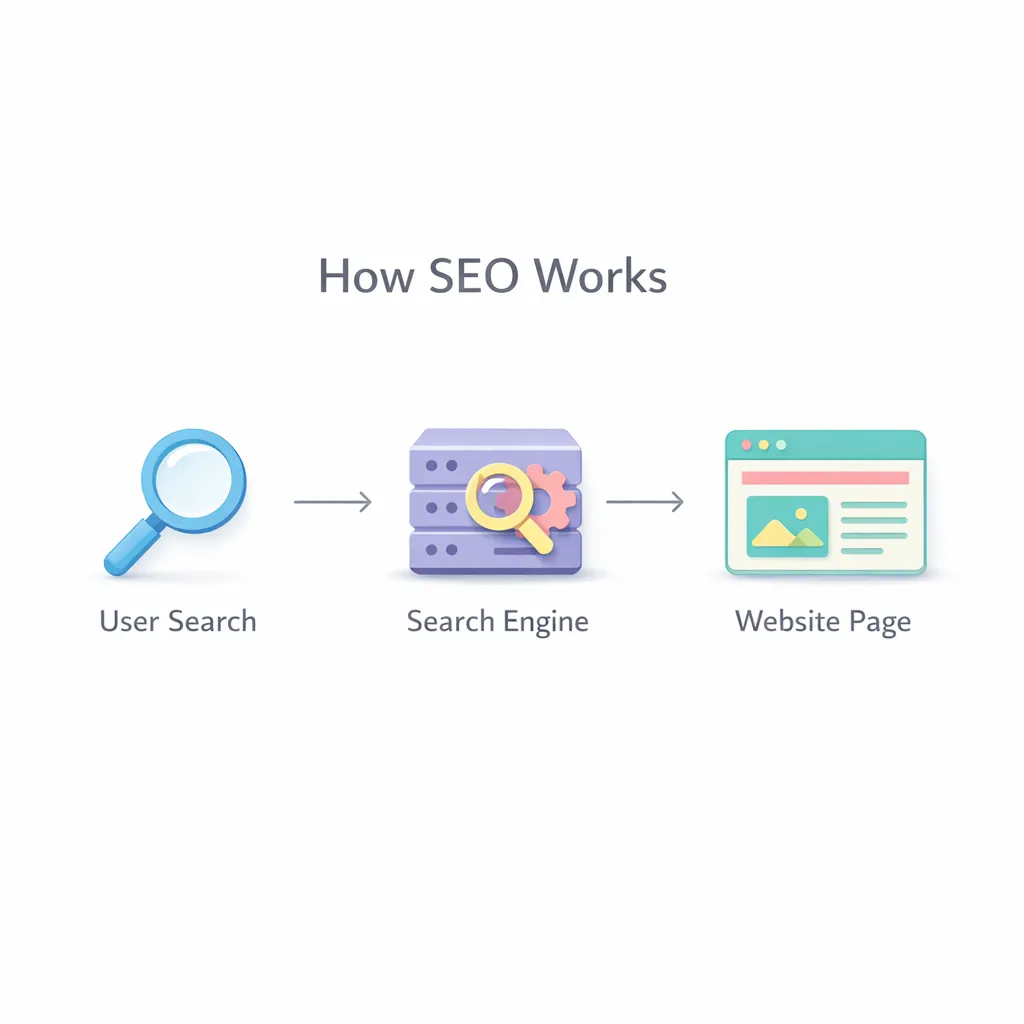
SEO, or Search Engine Optimization, is the method of making your website simpler for search engines like Google to crawl, understand, and show to the right users.
In simple terms, SEO helps your content appear when someone searches for information related to your business.
As a marketer, SEO connects three things:
What users are searching for
What your website offers
How search engines evaluate relevance and quality
When these align, visibility follows.
Why SEO Terminology Often Feels Confusing
SEO terminology feels confusing because the industry evolves constantly. Algorithm updates, new AI systems, and changing SERPs introduce new language fast, especially aftermajor core updates.
Common reasons you may feel overwhelmed include:
Multiple terms describing similar concepts
Technical language used without explanation
Buzzwords replacing clear definitions
Understanding terminology gives you clarity. It helps you filter noise and focus on what actually impacts performance.
Search Engine Basics You Must Know
Before diving into advanced terms, you need to understand how search engines work at a basic level. These concepts form the foundation of everything else in SEO.
What Is a Search Engine?
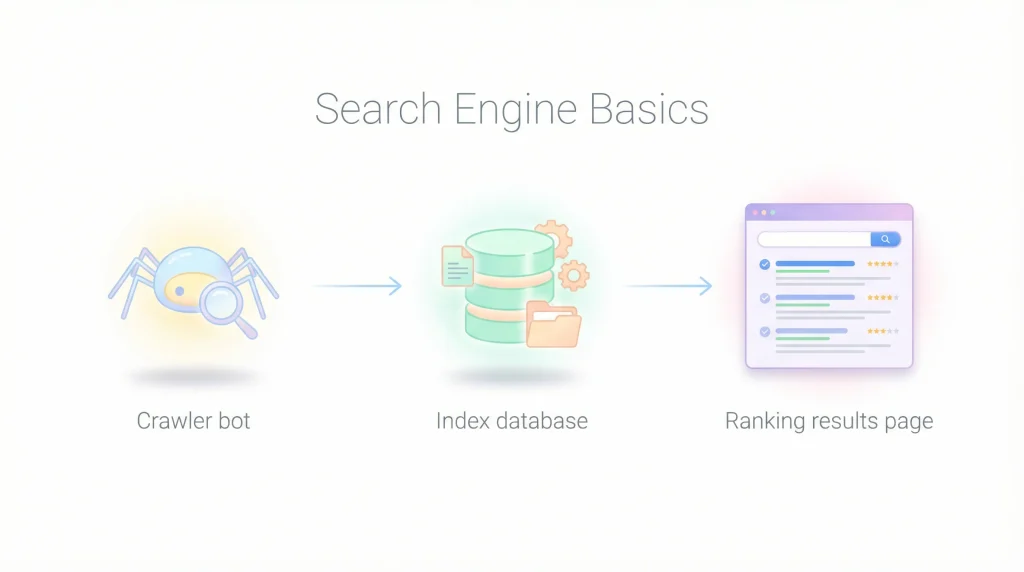
A search engine is a system that discovers, organizes, and retrieves information from the web. Examples include:
Google
Bing
DuckDuckGo
Baidu
Search engines scan websites, understand content, and rank pages based on relevance and quality. When you publish content, your goal is to make that process as easy and accurate as possible.
What Is an Algorithm?
An algorithm is a set of rules a search engine uses to decide which pages appear for a search query.
Google uses multiple algorithms working together, many of which rely onlarge language models to interpret meaning and intent. Some evaluate content quality. Others measure user experience or trust.
You do not optimize for one algorithm. You optimize for alignment with how search engines evaluate value.
What Is a Search Engine Results Page (SERP)?
A SERP is the page you see after typing a query into a search engine. Modern SERPs include:
SEO is no longer just about ranking links. Visibility now comes in multiple formats, and understanding those formats shapes smarter strategies.
Keyword and Search Intent Terminology
Keywords are where most marketers start, but intent is what actually drives results.
What Is a Keyword?
In SEO, a keyword is the phrase people search for, which helps you understand what they want and what to create content about.
There are two main types:
Short tail keywords such as “SEO.”
Long tail keywords such as “SEO terminology for marketers”
Longer phrases usually signal clearer intent. When you understand keyword types, you can choose terms that align with what users actually want.
What Is Search Intent?
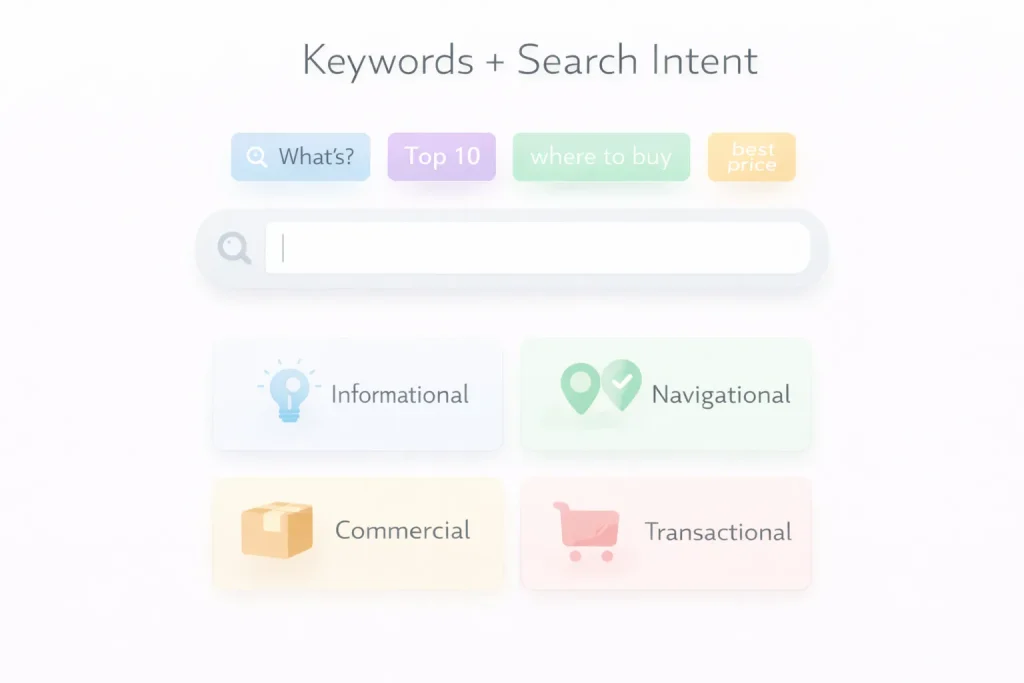
Search intent explains why someone searches. There are four main intent types:
Informational
Navigational
Commercial
Transactional
You should know that intent determines what type of content to create. An informational query needs education. A transactional query needs a clear action path.
Matching intent is always more important than matching keywords.
What Are Queries and Query Variations?
A query is the actual phrase a user types or speaks. Query variations include different ways users ask the same question. Search engines understand these relationships.
Your content should answer the core question clearly rather than chasing every variation.
On Page SEO Terminology
On-page SEO refers to optimization you control directly on your website.
On-page SEO includes everything you do on a page to help search engines understand content. This includes structure, clarity, and relevance.
On-page SEO is about communication. You are explaining your content to both humans and machines.
What Is a Title Tag?
A title tag is the clickable headline shown in search results.
It should:
Describe the page clearly
Match search intent
Encourage clicks
Strong titles improve content visibility and engagement.
What Is a Meta Description?
A meta description in search results is an overview of the page content. While it has no direct effect on rankings, it does influence click behaviour. Think of it as your pitch to the searcher.
What Are Header Tags (H1, H2, H3)?
Header tags structure your content.
They help:
Readers scan content easily
Search engines understand hierarchy
Headers in content improve clarity and machine readability at the same time.
What Is Internal Linking?
Internal links connect pages within your website.
They help:
Distribute authority
Guide users
Clarify relationships between topics
A strong internal linking structure improves both SEO and user experience.
What Is Image Alt Text?
Alt text explains pictures in search engines and accessibility programs. It helps search engines in understanding visual material and assists users with screen readers. Clear alt text improves inclusivity and relevance.
Technical SEO Terminology
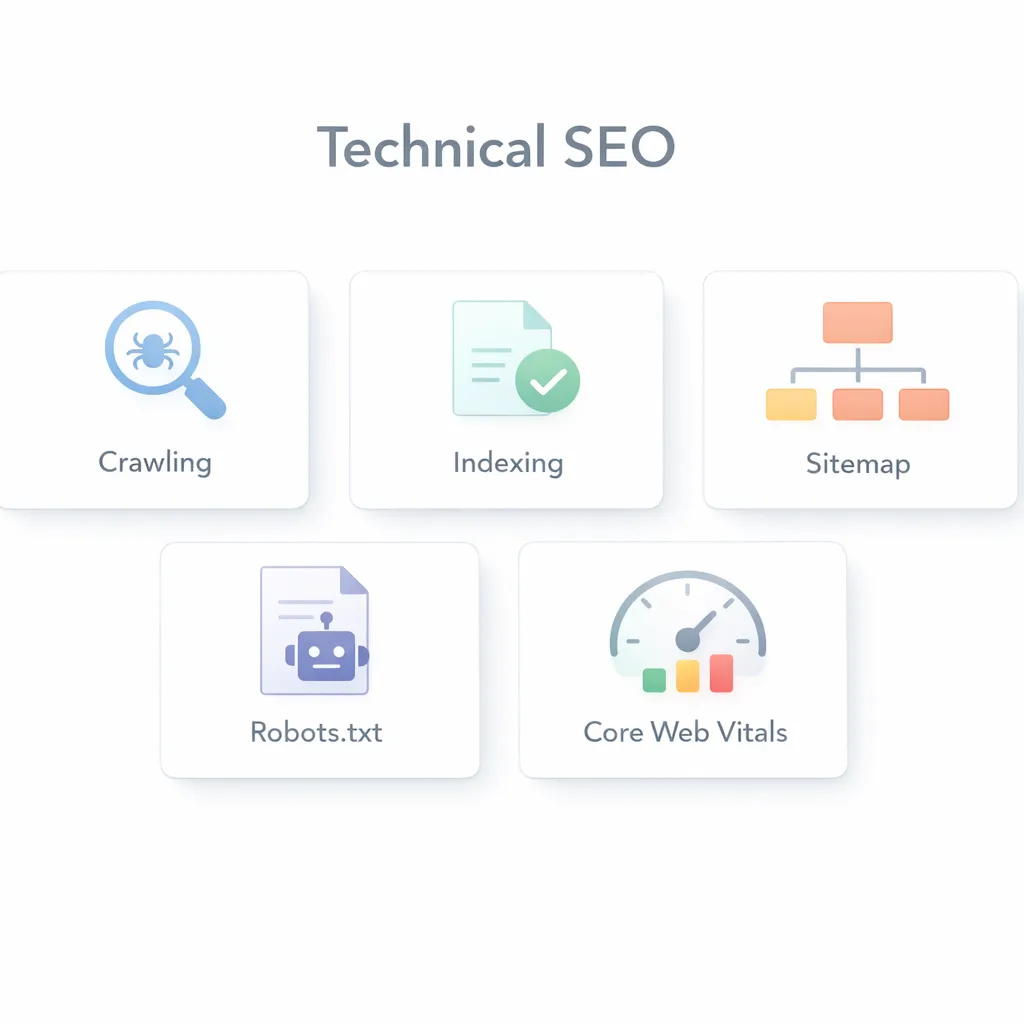
Technical SEO guarantees that search engines can find and analyze your website appropriately.
What Is Technical SEO?
Technical SEO focuses on how your site is built and delivered. It includes performance, structure, and accessibility. Technical SEO protects your content investment. Without it, even great content struggles.
What Is Crawling?
Crawling is how search engines discover pages. They use automated programs to scan websites and follow links. If your pages cannot be crawled, they cannot be ranked.
What Is Indexing?
Indexing is when a page is stored in a search engine database. Search results can only display pages that have been indexed. Crawling finds pages. Indexing stores them.
What Is a Sitemap?
A sitemap is a file that lists important pages on your site. It helps search engines understand structure and priorities. Submitting a sitemap improves discovery, especially for new or large sites.
What Is Robots.txt?
Robots.txt tells search engines which pages they can or cannot access. Used incorrectly, it can block important content. For you, this file requires caution and regular review.
Strong performance improves engagement and supports rankings.
Content and Semantic SEO Terminology
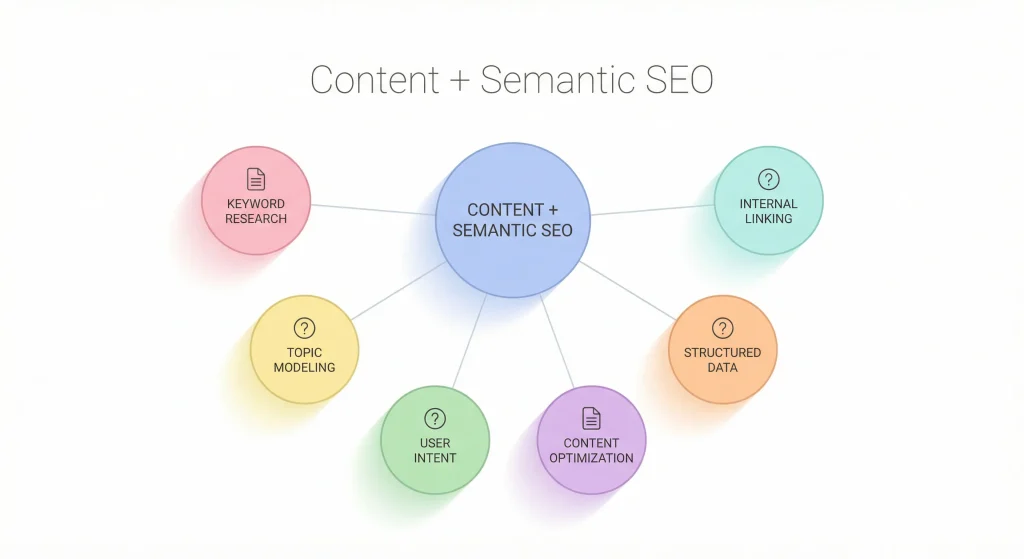
Content is no longer evaluated page by page. Search engines now look at how well your content explains a topic as a whole. This is where semantic SEO comes in.
By understanding these terms, you can create content that ranks more consistently and survives algorithm changes.
What Is Content Optimization?
Content optimization is the way you can enhance content so that it is clear, relevant, and useful for a specific search intent.
This includes:
Clear definitions
Logical structure
Direct answers near the top
Supporting details that add depth
Optimized content does not mean over-optimized. It means your content helps users get what they came for without confusion.
What Is Semantic SEO?
Semantic SEO focuses on meaning rather than exact words.
Instead of targeting one keyword, you cover an entire topic thoroughly. Search engines then understand what your content is really about.
Semantic SEO means:
Writing naturally
Explaining related concepts
Avoiding repetitive keyword usage
When you cover a topic well, rankings follow naturally.
What Are Topic Clusters?
Topic clusters are groups of related content centred around a main topic. They usually include:
One main pillar page
Several supporting articles
Internal links connecting them
This structure helps search engines to better comprehend your expertise and makes it easier for consumers to explore your information.
What Are Entities in SEO?
Entities are clearly defined concepts such as brands, products, companies, tools, or people.
Examples include Google Analytics, Ahrefs, Shopify, Wikipedia, and John Mueller.
When your content references real entities accurately and consistently, search engines gain confidence in your content. Entity usage improves clarity and trust at the same time.
Authority and Trust Terminology
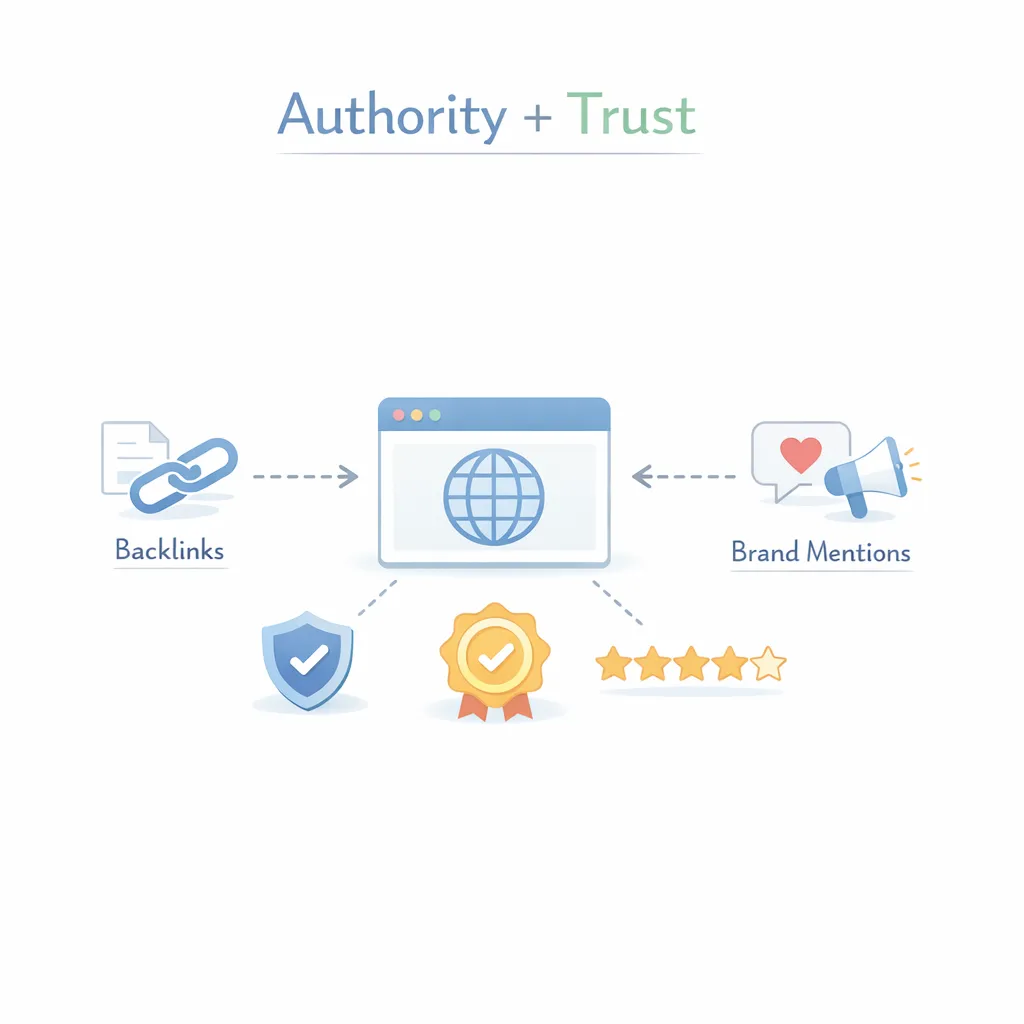
Authority determines whether search engines trust your content enough to rank it consistently.
Understanding these terms helps you focus on long-term credibility instead of short-term tricks.
What Are Backlinks?
Backlinks are links from other websites to yours. They act as signals of trust, especially when they come from reputable sites.
Quality matters more than quantity. A few links from trusted domains carry more value than many low-quality links.
What Is Domain Authority?
Domain Authority is a third-party metric created by tools like Moz. It calculates how likely a site is to rank compared to others. It is not a Google ranking factor, but it is useful for competitive analysis. It is a directional metric, not a goal.
What Is E E A T?
E E A T stands for Experience, Expertise, Authoritativeness, and Trustworthiness. Google uses these principles to evaluate content quality, especially for sensitive topics.
To strengthen E E A T, you should:
Show author credentials
Provide accurate information
Cite reliable sources
Maintain consistency across your site
Strong E E A T builds resilience against algorithm updates.
What Are Citations and Brand Mentions?
A citation is when your brand is mentioned online, sometimes with a link and sometimes without one. Brand mentions help search engines recognize your business as a real entity.
Visibility across trusted sites strengthens authority even without direct backlinks.
Advanced and Modern SEO Terminology
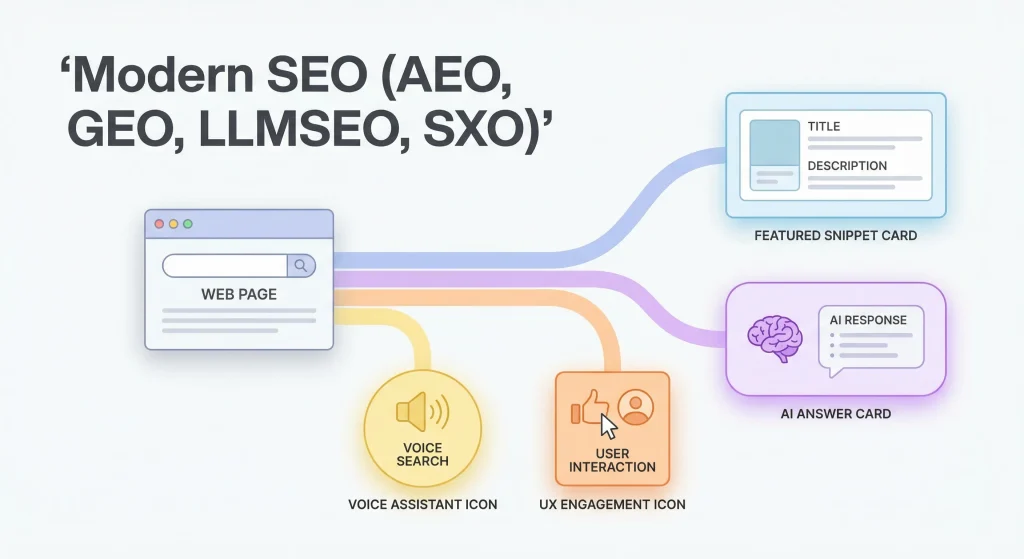
SEO continues to evolve. These newer terms reflect how search is changing. Understanding them helps you stay relevant.
What Is AEO (Answer Engine Optimization)?
AEO focuses on optimizing content so it can be selected as a direct answer. This includes featured snippets, voice assistants, and People Also Ask results. Clear questions and concise answers improve AEO performance.
What Is GEO (Generative Engine Optimization)?
GEO focuses on optimizing content so generative AI systems can understand and reuse it. This includes tools like ChatGPT, Google AI Overviews, and Perplexity AI.
GEO is about clarity, structure, and trust rather than rankings alone.
What Is LLMSEO?
LLMSEO focuses on how large language models interpret content.
It emphasizes:
Clear structure
Simple language
Accurate explanations
LLMSEO helps your content be summarized correctly by AI tools.
What Is SXO (Search Experience Optimization)?
SXO combines SEO with user experience. It focuses on what happens after a user clicks. Strong SXO improves engagement, conversions, and long-term visibility.
Analytics and Measurement Terminology
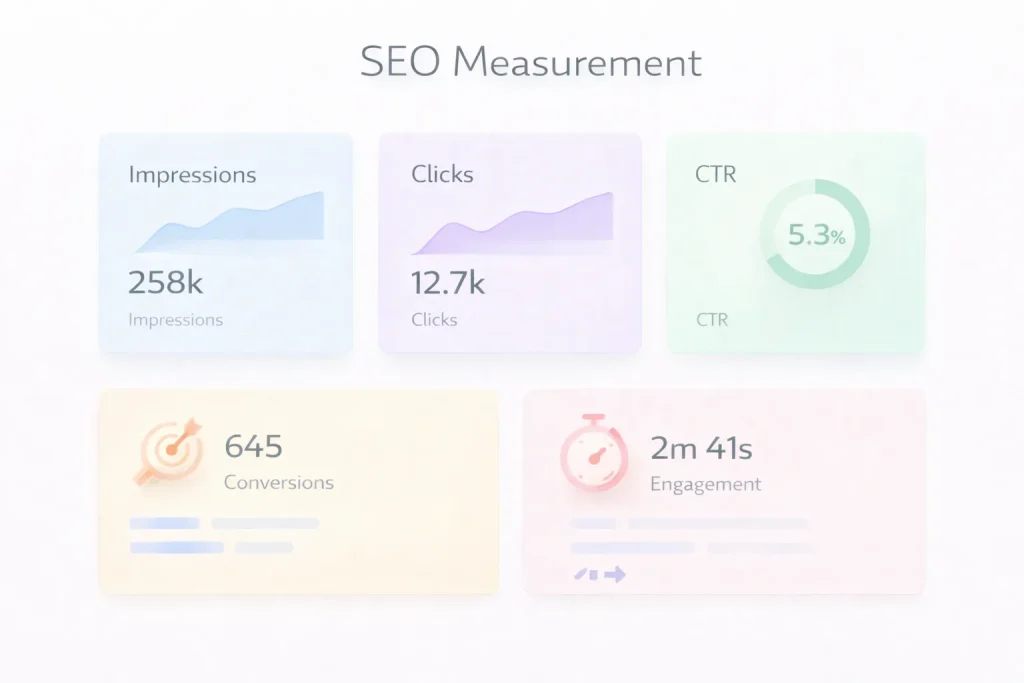
SEO without measurement is guesswork. These terms help you evaluate performance accurately.
What Is Google Search Console?
Google Search Console shows how your site performs in Google Search.
It provides data on:
Indexing
Queries
Impressions
Clicks
It is one of the most important SEO tools.
What Is Google Analytics?
Google Analytics monitors user activity on your website. It shows where users come from and what they do after arriving. This data helps connect SEO efforts to business outcomes.
What Is Click Through Rate (CTR)?
CTR measures how often users click your result after seeing it. Low CTR can indicate unclear titles or descriptions. Improving CTR increases traffic without improving rankings.
What Is Bounce Rate?
Bounce rate shows how many users leave after viewing one page. High bounce rates may indicate poor intent matching or weak experience.
What Is Conversion Rate?
Conversion rate measures how often users complete a desired action. This connects SEO to revenue and leads.
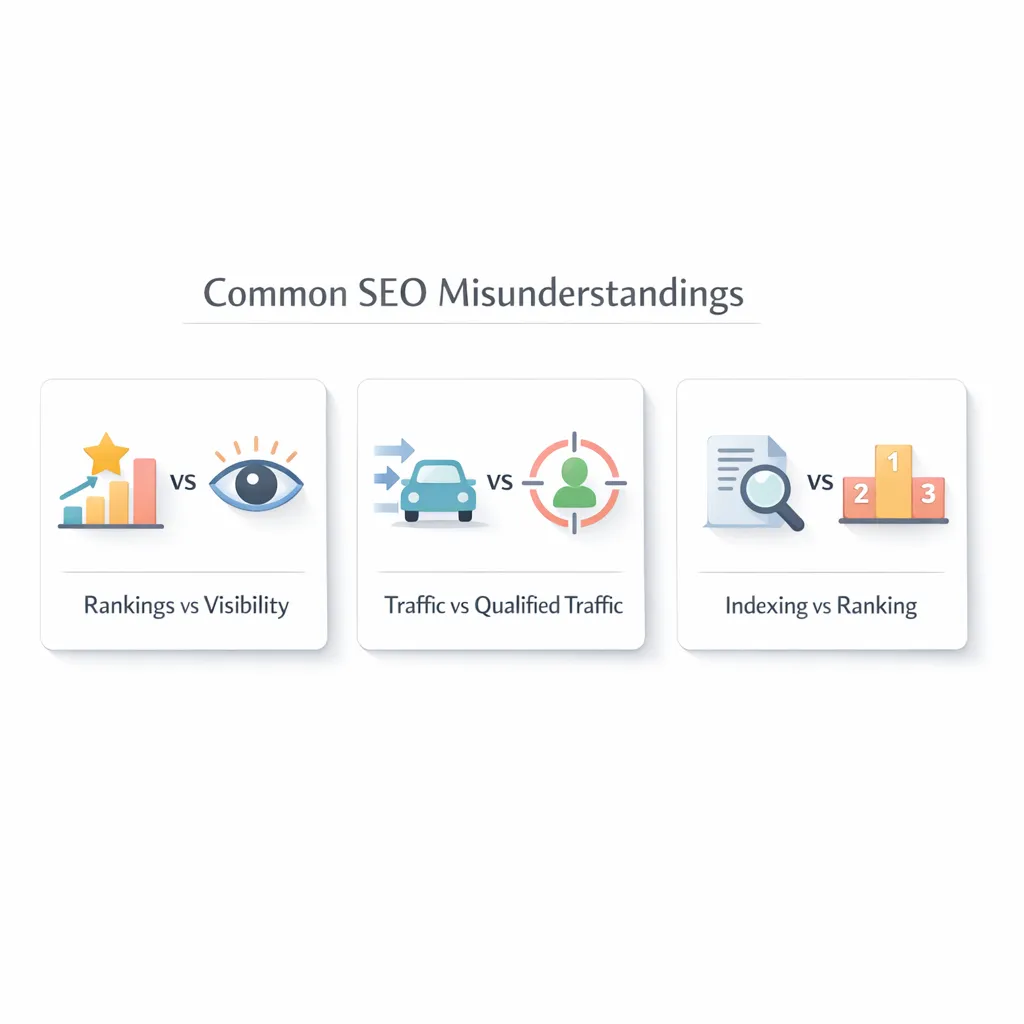
Common SEO Terms Marketers Misunderstand
Some terms cause confusion and poor decisions. Misinterpretation often leads teams to prioritize the wrong metrics or tactics.
Rankings vs Visibility
Ranking refers to position. Visibility refers to how often you appear. Visibility matters more in modern search.
Traffic vs Qualified Traffic
More traffic does not always mean better results. Qualified traffic aligns with intent and converts more often.
Indexing vs Ranking
Indexing means a page exists in the index. Ranking determines where it appears. A page must be indexed before it can rank.
How Should Marketers Use SEO Terminology Correctly?
Understanding terminology improves communication and strategy.
Clear language leads to clear decisions. You focus on outcomes rather than buzzwords. When teams share definitions, execution improves. Misunderstandings decrease, and results improve.
Conclusion
SEO terminology is not just language. It is a framework for thinking.
When you understand these terms, you make smarter decisions, communicate more clearly, and build strategies that last. Mastering SEO language helps you work with search engines instead of guessing how they work.
At Notionhive, we bridge the gap between technical complexity and marketing results. As a specializedSEO agency in Bangladesh, we ensure your site is built on a foundation of clarity, security, and authority.
Ready to turn this terminology into a strategy?Get in touch with us today for a thorough SEO analysis of your website.
Frequently Asked Questions
1. What is SEO in simple terms?
SEO is the process of improving your website so search engines can understand it and show it to the right people when they search. In practice, SEO combines content, technical performance, and trust so your pages can earn visibility consistently.
2. Why should marketers learn SEO terminology?
SEO work is highly collaborative. When marketers understand SEO terms, they make better strategy decisions, communicate more clearly with writers and developers, and avoid costly mistakes caused by misunderstandings.
3. Is SEO only about keywords?
No. Keywords still matter, but modern SEO is mainly about matching search intent and delivering a better page than the alternatives. Strong SEO also includes content quality, technical performance, user experience, and trust signals.
4. What is the difference between on-page SEO and technical SEO?
On-page SEO focuses on content and structure, while technical SEO focuses on how search engines access, crawl, and index your site. Both matter because strong SEO depends on visibility and performance.
5. What does search intent mean in SEO?
Search intent explains why someone searches. Understanding intent helps you create content that matches what the user actually wants, which improves rankings and conversions.
6. What are entities in SEO, and why do they matter?
Entities are clearly defined concepts like brands, tools, or people. They help search engines and AI systems understand context, relationships, and meaning beyond keywords, which supports topical authority.
7. What is E E A T, and why is it important?
E E A T stands for Experience, Expertise, Authoritativeness, and Trustworthiness. It helps search engines evaluate whether content is reliable, especially in topics where accuracy matters.
8. How do AEO and GEO differ from traditional SEO?
AEO focuses on structuring content for direct answers. GEO focuses on making content easier for AI systems to interpret and reuse accurately. Traditional SEO overlaps with both, but still includes crawling, indexing, and rankings.
9. Which SEO tools should every marketer know?
Google Search Console and Google Analytics are foundational. Tools like Screaming Frog and Ahrefs are valuable for audits and competitive research. AI tools like ChatGPT can support ideation, but should not replace expert review.
10. How can I keep up with changing SEO terminology?
Follow trusted industry sources, test changes on real pages, and focus on understanding concepts rather than memorizing buzzwords. SEO changes often, but fundamentals like intent and trust remain stable.
Are you ready to achieve success with advanced technology and strategic digital services?
We're not miracle workers. But we excel at what we do.
We help you grow your business organically, reach your technology and marketing goals, and increase leads and revenue. We do all of this using effective tech solutions and practical marketing strategies.