If you feel like SEO keeps changing faster than you can keep up, you are not imagining it. What worked a few years ago is no longer enough to stay visible, competitive, or trusted online.
Advanced SEO exists because search engines no longer reward surface-level optimization.
If you want consistent organic growth, qualified traffic, and long-term authority, you need to understand how advanced SEO works and why it directly impacts your business results.
What Is Advanced SEO?
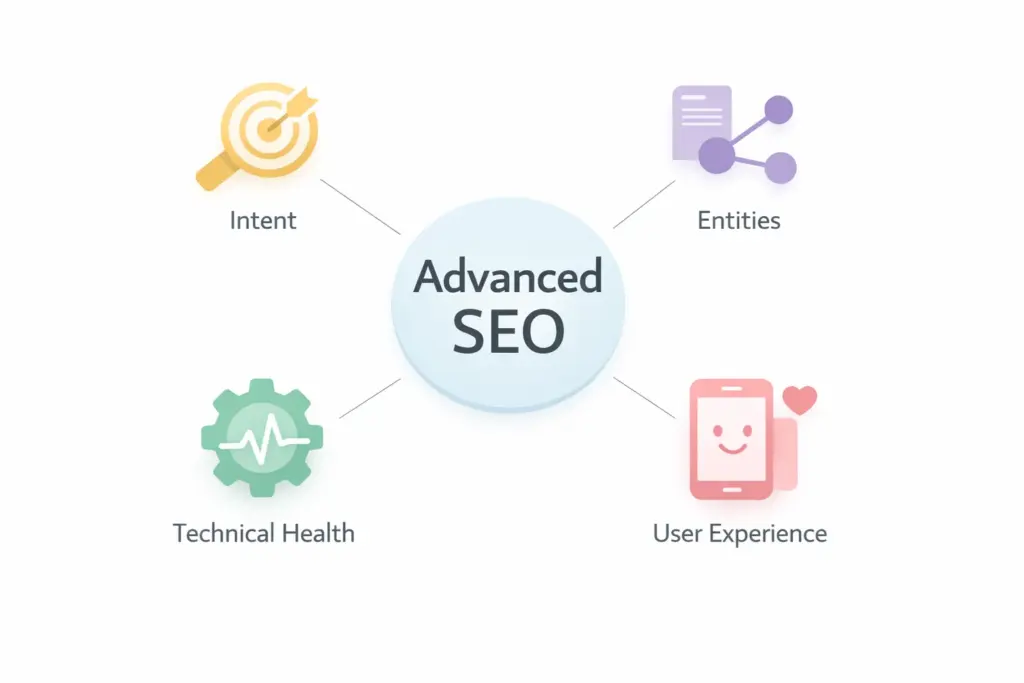
Advanced SEO is the practice of optimizing your website for modern search systems that rely on intent, context, entities, and experience rather than just keywords.
In simple terms, advanced SEO helps search engines understand who you are, what you offer, and why you are a reliable source, while also making sure users have a strong experience once they arrive.
If basic SEO helps your pages get indexed, advanced SEO helps your business get trusted.
How Is Advanced SEO Different from Traditional SEO?
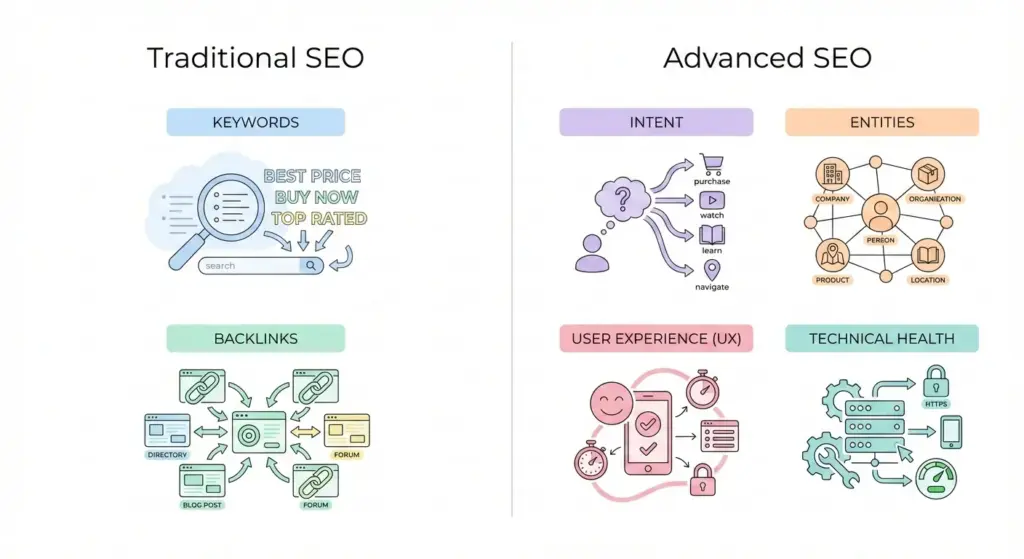
Traditional SEO focuses on fundamentals like keywords, backlinks, and basic on-page optimization. Those still matter, but they are no longer enough on their own.
Advanced SEO goes further by focusing on:
- Search intent rather than keyword matching
- Topic depth instead of single-page optimization
- Entity recognition for brands, products, and people
- Technical performance and user experience
- AI readability and answer-driven visibility
As a business owner or marketer, this means your content is no longer competing only with other websites. It is competing with AI-generated answers, featured snippets, and knowledge panels.
Today, your content is competing with AI-generated answers and knowledge panels. To navigate this, you must understand the new landscape of GEO, LLM SEO, AEO, and SXO.
What Problems Does Advanced SEO Solve for Businesses?
You might already be feeling some of these challenges. Traffic is flat even though you publish content. Rankings fluctuate after every core update.
Competitors with fewer pages outrank you. AI tools answer questions without sending users to your site.
Advanced SEO is designed to solve problems like:
- Declining organic visibility
- Low-quality traffic that does not convert
- Content that ranks but does not build trust
- Websites that struggle after algorithm updates
If your SEO efforts feel disconnected from real business growth, advanced SEO helps realign them.
Why Has SEO Become More Complex in Recent Years?
SEO did not become complex by accident. It became complex because search engines became smarter, and user expectations increased.
Google no longer wants to show pages that simply match words. It wants to show results that solve problems clearly and efficiently. Remember, your website is evaluated as a system, not a collection of pages.
How Have Google Algorithms Changed SEO?
Several major changes reshaped SEO in recent years. Google introduced systems like:
- The Helpful Content System
- Core algorithm updates
- AI-powered search experiences, such as AI Overviews
These systems evaluate whether content is written for people, whether it demonstrates expertise, and whether it provides real value beyond what already exists.
If your content is thin, repetitive, or written only to rank, these systems will suppress it. Advanced SEO aligns your content with how these systems evaluate quality.
What Role Does AI Play in Modern Search?
AI is no longer experimental in search. It is foundational.
Google uses AI models like Gemini. Tools like ChatGPT and Perplexity AI influence how people discover information. Voice assistants like Google Assistant rely on natural language answers.
This matters to you because:
- AI prefers clear, structured answers
- AI relies on entity recognition
- AI summarizes content instead of linking to it
Advanced SEO ensures your content can be understood, summarized, and trusted by AI systems instead of being ignored.
What Are the Core Components of Advanced SEO?
Advanced SEO is not one tactic. It is a system made up of multiple components working together. When one component is weak, the whole system suffers.
Technical SEO Foundations
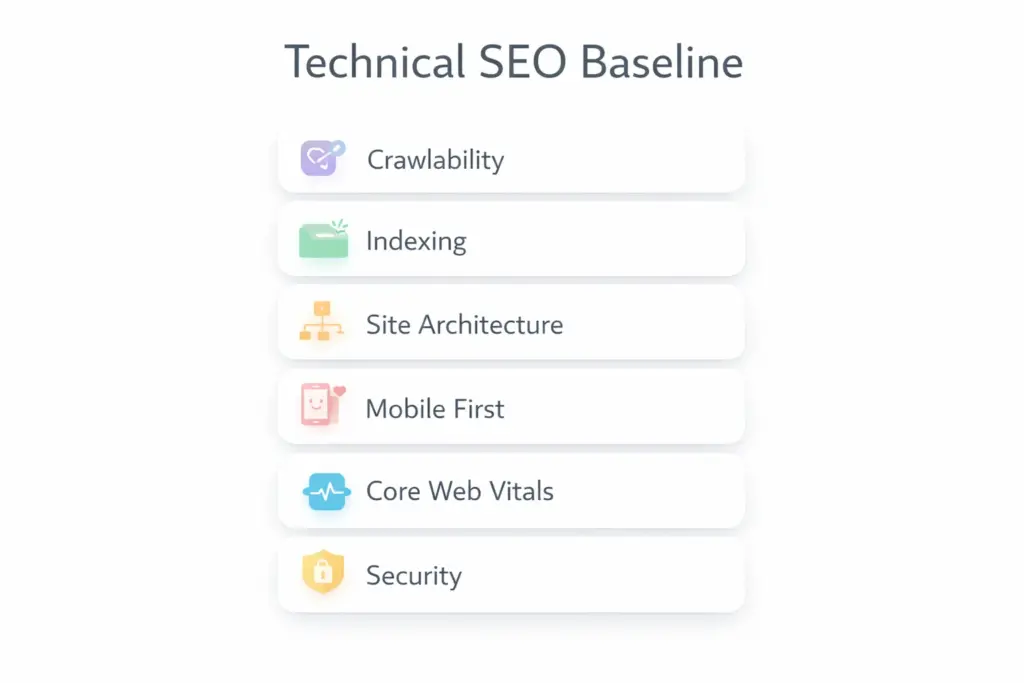
Technical SEO ensures search engines can access, understand, and evaluate your site correctly.
Key technical foundations include:
- Crawlability and indexing
- Clean site architecture
- Mobile first optimization
- Core Web Vitals performance
- Secure and accessible pages
If your site is slow, broken, or difficult to navigate, even the best content will struggle. Advanced SEO treats technical health as a baseline, not an afterthought.
As a professional web design company in Bangladesh, we treat technical health as a non-negotiable prerequisite for ranking.
Content Intelligence and Semantic SEO
This is where many businesses fall behind.
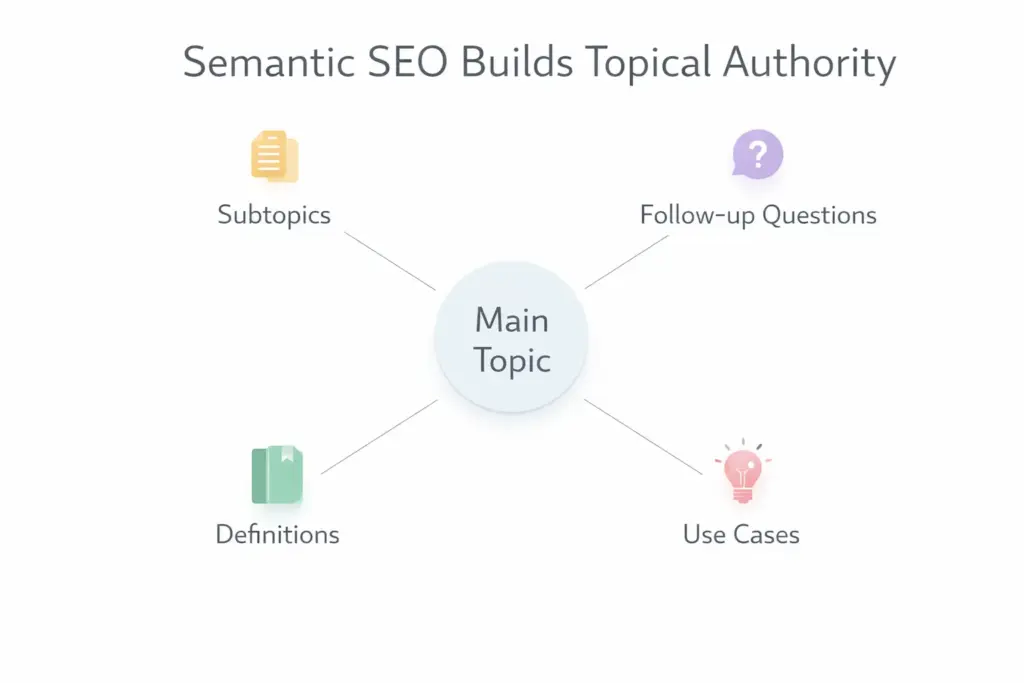
Semantic SEO focuses on topics and meaning rather than isolated keywords. It helps search engines understand how your content connects to broader concepts.
Advanced content optimization includes:
- Mapping content to search intent
- Building topic clusters instead of single articles
- Using clear definitions and explanations
- Answering follow-up questions proactively
When you structure content this way, your site becomes easier to trust and easier to rank. You are no longer publishing content just to fill a calendar. You are building topical authority.
If you are struggling with content that ranks but doesn't convert, you likely need a more cohesive digital marketing strategy.
Authority Building and Digital Trust
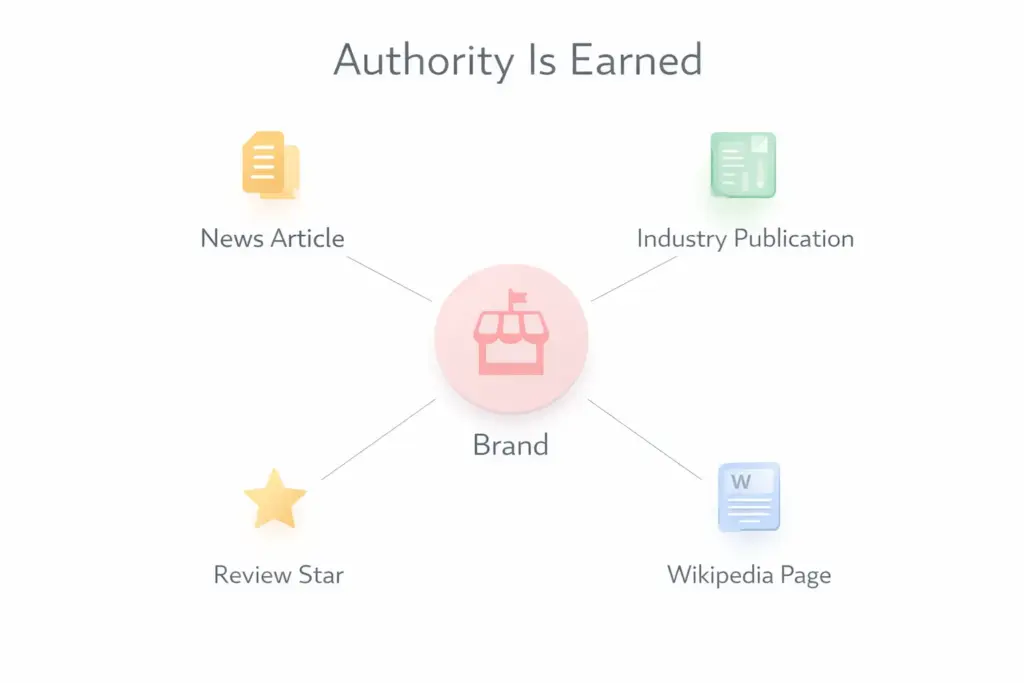
Authority is not claimed. It is earned. Advanced SEO focuses on signals that demonstrate trust and credibility, such as:
- Expert authorship
- Brand mentions across the web
- Links from trusted domains like Wikipedia, industry publications, and well-known brands
- Consistent messaging across platforms
For your business, this means search engines see you as a real entity, not just another website.
Authority is also what protects you during algorithm updates. Sites with strong trust signals recover faster and lose less visibility.
User Experience and SXO
Search engines measure how users interact with your site. If users land on your page and leave immediately, that sends a signal. If they scroll, engage, and explore, that sends another.
Advanced SEO integrates Search Experience Optimization by focusing on:
- Clear navigation
- Readable layouts
- Fast loading pages
- Content that matches user intent
You should think of SEO and user experience as one system. Ranking brings users in. Experience keeps them there.
How Does Advanced SEO Support the Buyer Journey?
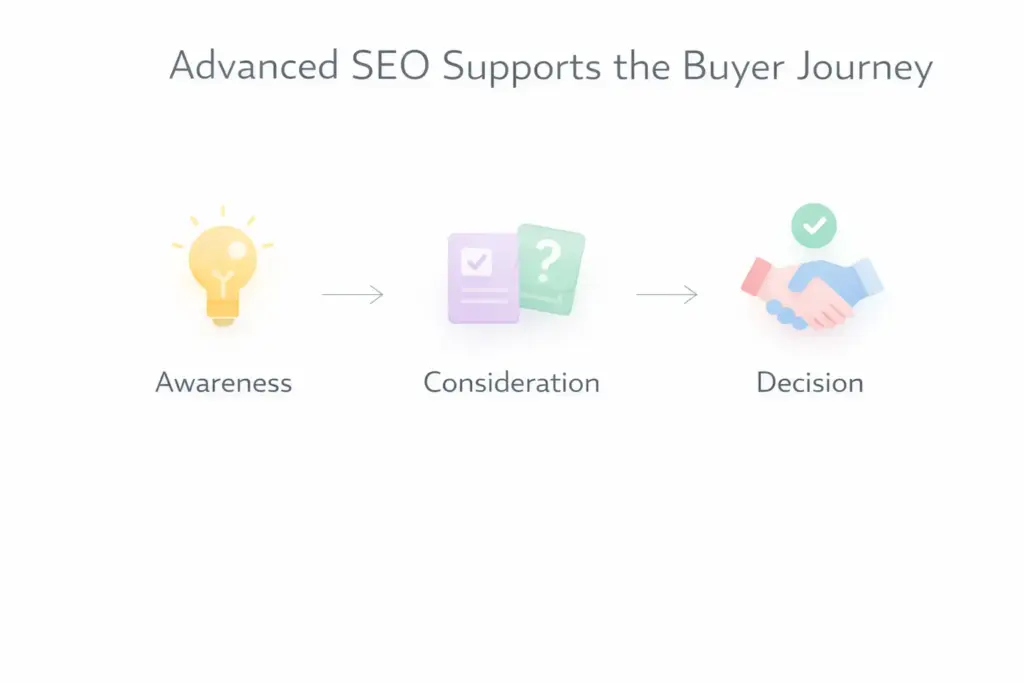
Advanced SEO does not stop at traffic. It supports how people move from awareness to decision.
This matters because not every visitor is ready to buy. Your content should meet users where they are.
Awareness Stage SEO Strategies
At the awareness stage, users are trying to understand a problem. Advanced SEO supports this stage by creating:
- Educational content
- Clear explanations
- Industry definitions
- Problem-focused articles
This builds trust early. Even if users are not ready to convert, they remember who helped them understand the issue.
Consideration Stage SEO Strategies
In the consideration stage, users compare options. Advanced SEO offer:
- Comparisons and alternatives
- Use cases
- Solution-focused guides
- Feature explanations
This is where you show expertise without overselling. You help users make informed decisions.
Decision Stage SEO Strategies
At the decision stage, users are ready to act. Advanced SEO supports:
- Product and service pages
- Case studies
- Reviews and testimonials
- Clear next steps
When your SEO strategy covers all stages, organic traffic becomes a growth engine, not just a visibility metric. To track this effectively, you must monitor the right marketing KPIs to see which stages are driving the most value.
What Role Do Entities and Structured Data Play in Advanced SEO?
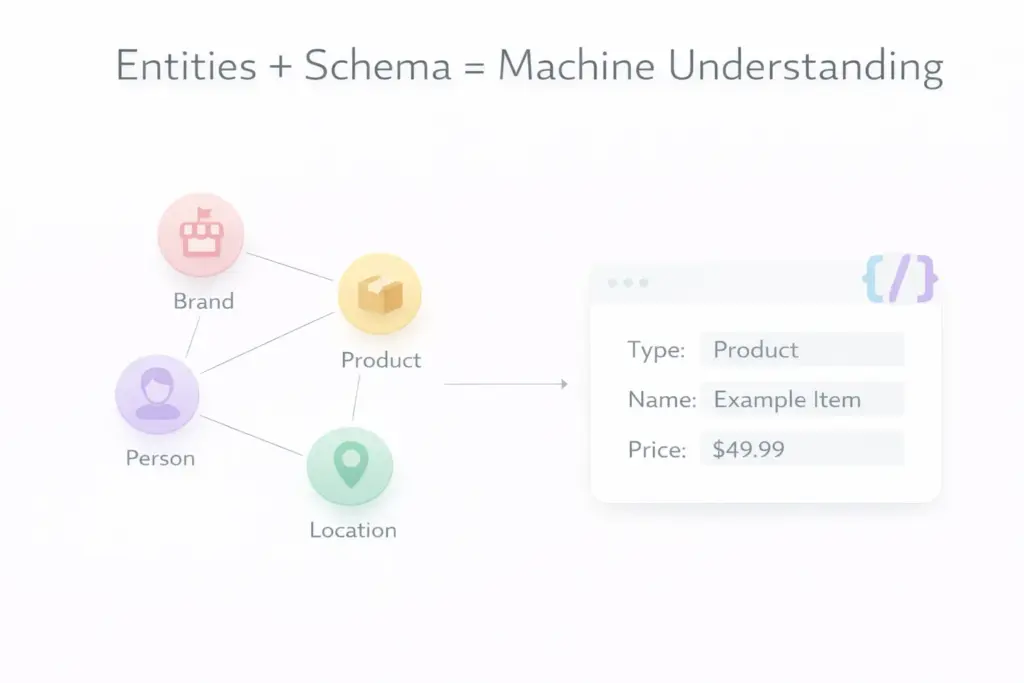
If you want search engines and AI systems to truly understand your business, keywords alone will not get you there. Entities and structured data are what turn your website from text on a page into a recognizable, trustworthy source.
An entity is a clearly defined concept, such as a brand, product, company, person, or location. Google understands entities like Google Analytics, HubSpot, Shopify, John Mueller, and Wikipedia as real things with relationships.
Advanced SEO helps you become one of those understood entities.
Why Entity SEO Matters for AI and Search Engines
Search engines no longer guess meaning from keywords alone. They connect entities and relationships.
When your content clearly references specific tools, brands, platforms, or people, it becomes easier for machines to understand context.
Entity optimization helps by:
- Increasing clarity in AI-generated answers
- Improving visibility in knowledge panels and AI Overviews
- Strengthening topical authority
- Reducing misinterpretation of your content
If your brand is consistently mentioned alongside known entities, your authority grows naturally.
How Schema Markup Improves Visibility
Schema markup gives search engines explicit information about your content. It helps machines understand what your page represents, not just what it says.
Common schema types used in advanced SEO include:
- Organization schema to define your business
- Article schema to clarify authorship and expertise
- FAQ schema to support answer engines
- Product and review schema for decision stage content
You may not see immediate ranking jumps, but schema improves eligibility for enhanced results and AI-driven features.
How Does Advanced SEO Improve Business Results?
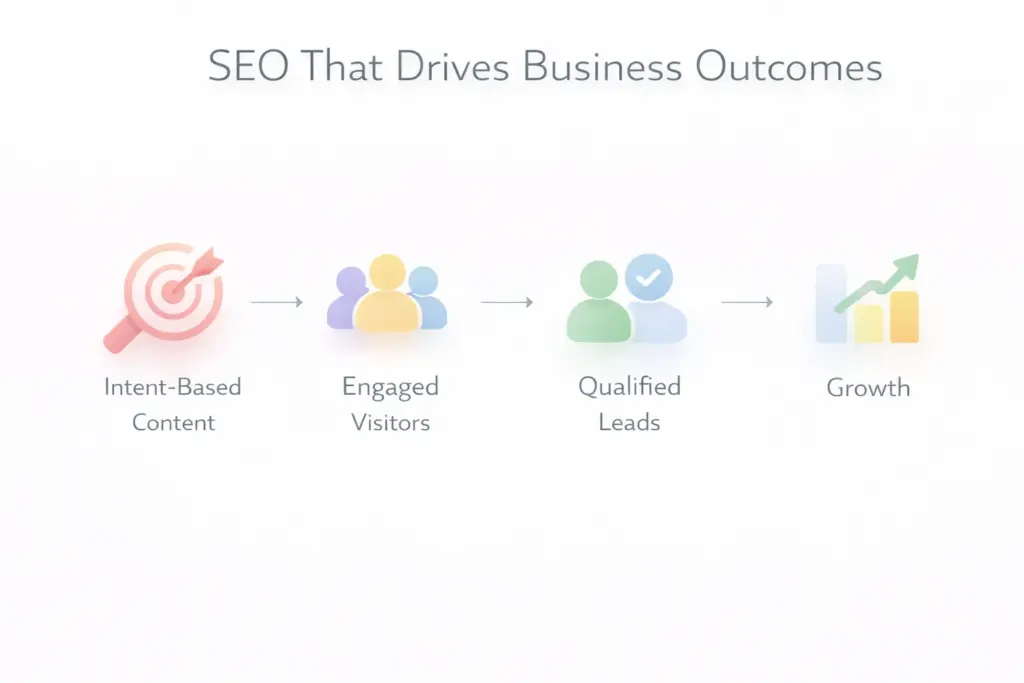
Advanced SEO is not about vanity metrics. It is about outcomes that matter to your business. When implemented correctly, it aligns visibility with intent and authority with trust.
How Advanced SEO Drives Qualified Traffic
Advanced SEO filters traffic naturally. By targeting intent instead of volume, you attract users who are more likely to engage, convert, and return.
Benefits include:
- Lower bounce rates
- Longer time on page
- Higher conversion potential
- Better lead quality
You spend less time chasing traffic and more time serving the right audience.
How Advanced SEO Supports Long-Term Growth
One of the biggest advantages of advanced SEO is durability. Instead of chasing algorithm changes, you align with how search engines are designed to work.
That leads to:
- Compounding organic visibility
- Stronger brand recognition
- Less volatility during updates
- Sustainable traffic growth
Advanced SEO turns your website into a long-term asset rather than a short-term experiment.
What Tools Are Used in Advanced SEO?
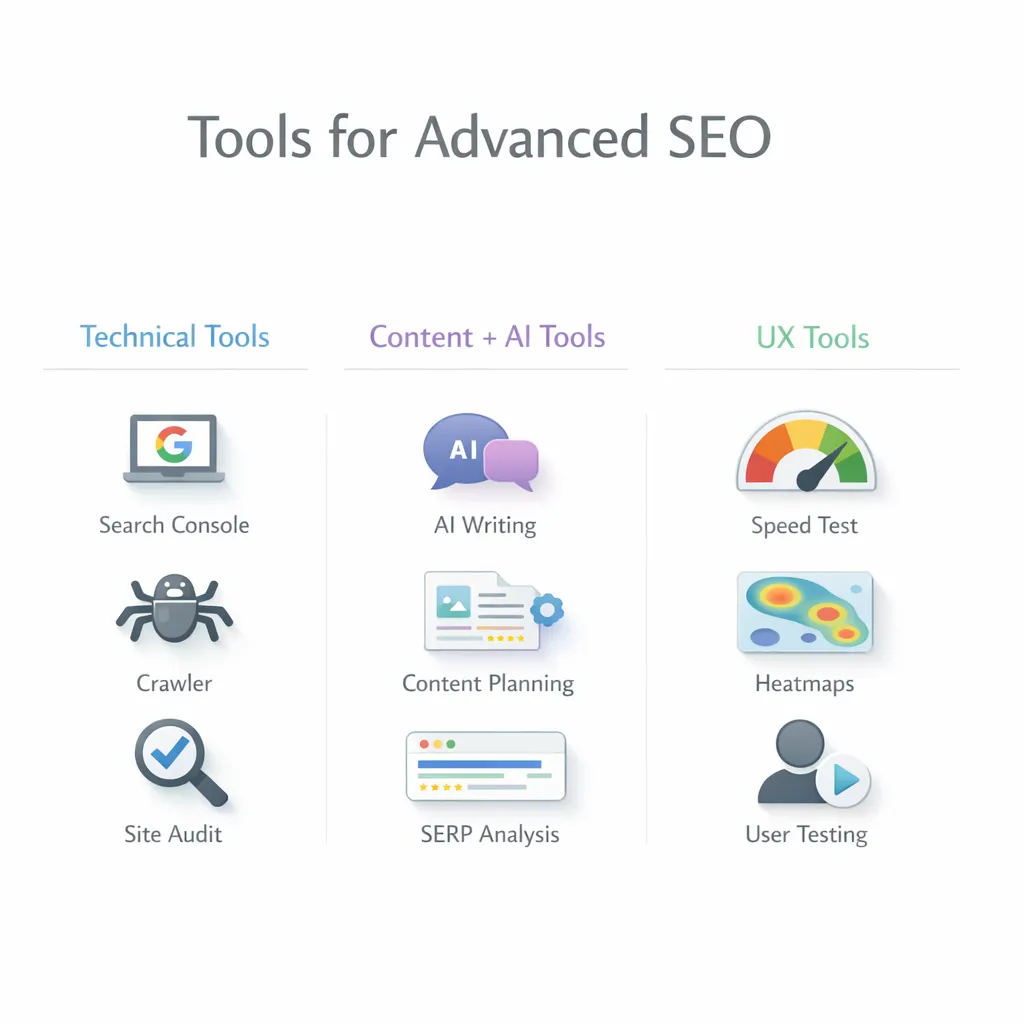
Advanced SEO relies on insight, not guesswork. The right tools help you understand performance, diagnose issues, and improve decision-making.
SEO and Technical Analysis Tools
These tools help you monitor how search engines see your site.
- Google Search Console for indexing and visibility
- Screaming Frog for crawl and technical audits
- Ahrefs for backlinks and competitive analysis
If you are serious about SEO, these tools are not optional.
AI and Content Optimization Tools
Modern SEO requires testing content through AI systems. Useful tools include:
- ChatGPT and Gemini to test summarization and clarity
- Frase and SurferSEO for content structure and topical depth
- Perplexity AI to monitor citations in AI answers
These tools help ensure your content works for both humans and machines.
UX and Performance Tools
User experience directly affects SEO outcomes.
Key tools include:
- Google PageSpeed Insights
- Lighthouse
- Hotjar
They help you understand how users actually experience your site.
What Are Common Mistakes Businesses Make with Advanced SEO?
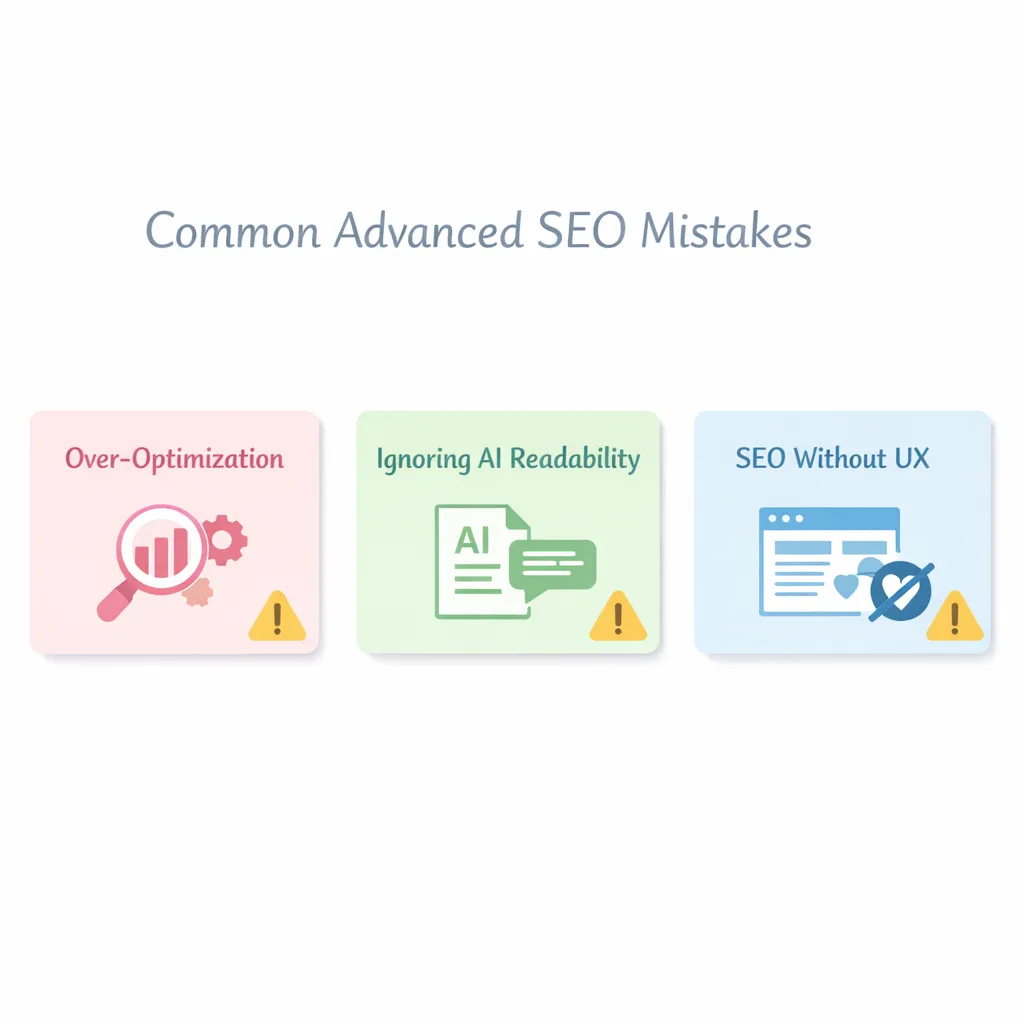
Even strong businesses struggle with advanced SEO when fundamentals are misunderstood.
Why Over-Optimizing Still Fails
Stuffing keywords or forcing optimization patterns reduces clarity. Machines and users both notice. Advanced SEO rewards clarity, not excess.
Why Ignoring AI Readability Is Risky
If AI systems cannot understand your content, they cannot reuse it. That limits visibility in AI-driven search experiences.
Why SEO Without UX Breaks Conversions
Traffic without experience does not convert. If users feel lost or frustrated, rankings lose value.
Who Should Invest in Advanced SEO?
Advanced SEO is not limited to large enterprises. It benefits any business that depends on organic visibility.
Is Advanced SEO Right for Small Businesses?
Yes, especially if you compete in crowded markets. Advanced SEO helps you compete on expertise rather than budget.
When Enterprises Need Advanced SEO
Enterprises rely on advanced SEO to manage scale, authority, and risk across large websites.
Advanced SEO for SaaS and E-commerce Brands
SaaS and e-commerce brands benefit from intent-based optimization, entity clarity, and buyer journey alignment.
How Do You Get Started with Advanced SEO?
You do not need to overhaul everything at once. A simple framework works best.
Step-by-Step Starting Framework
- Audit your technical and content foundations
- Identify gaps in intent and authority
- Prioritize high-impact improvements
- Measure outcomes consistently
Progress comes from consistency, not shortcuts.
How Do You Measure Success in Advanced SEO?
Advanced SEO success goes beyond rankings.
SEO Metrics That Matter
- Organic visibility
- Engagement metrics
- Conversion performance
AI and Answer Engine Visibility Metrics
- Mentions in AI-generated answers
- Brand citations
- Consistency of summaries
These signals show whether machines trust your content.
Conclusion
Advanced SEO exists because search has evolved.
If you want your business to remain visible, trusted, and competitive, you need more than basic optimization. You need a strategy that aligns with how people search and how machines interpret information.
When you focus on clarity, authority, experience, and intent, SEO becomes a growth system rather than a guessing game.
At Notionhive, we ensure your brand is preferred, not just found. Contact us today to partner with and secure your digital future.
Frequently Asked Questions
What is advanced SEO in simple terms?
Advanced SEO is SEO that prioritizes search intent, topical authority, content usefulness, and trust rather than just keywords. It focuses on building a site that search engines and users consistently choose.
Is advanced SEO only for large companies?
No. Small and mid-sized businesses often benefit the most because advanced SEO helps them compete on expertise and niche authority rather than budget.
How long does advanced SEO take to work?
You may see early movement in 6 to 12 weeks, but meaningful results typically take 3 to 6 months. In competitive markets, it can take 6 to 12 months because authority and trust signals build over time.
Does AI change how SEO works?
Yes. SEO now needs to support machine understanding. That means clearer structure, stronger topical coverage, and content that is easy to summarize accurately while still being written for humans.
Can advanced SEO replace paid ads?
Not completely. Advanced SEO can reduce reliance on ads over time, but the best strategy usually combines SEO for long-term growth and paid ads for short-term demand capture.
How much does advanced SEO cost?
Costs depend on your goals, competition, and your current site condition. Most pricing is driven by scope, such as technical fixes, content production, authority building, and ongoing optimization.
What industries benefit most from advanced SEO?
Industries with high competition and research-driven buyers benefit most, such as SaaS, ecommerce, healthcare, finance, and B2B services. In regulated or sensitive industries, accuracy and trust matter even more.
Is advanced SEO future-ready?
Yes. It aligns with how search is evolving, including semantic understanding, trust signals, and helpful content. It also supports visibility across AI-powered search and summarization systems.
Do I need technical skills for advanced SEO?
Not personally. You need the ability to collaborate with the right people. Advanced SEO usually requires teamwork between content, design, development, and brand.
How do I know if my SEO is advanced enough?
If your content earns consistent rankings, engaged users, quality backlinks, and branded searches, you are on the right track. Advanced SEO shows up when both users and search systems treat your site as a reliable source.

About Author
Tanzim Sarwar TazTanzim Sarwar Taz is a content writer with 7+ years of experience creating in-depth content on SEO, technology, web development trends, and AI-driven search. His work focuses on emerging topics such as AEO, GEO, search experience optimization, artificial intelligence, and modern web technologies, delivering practical insights backed by research and industry developments.